Reality Ranching November 2013

DSCF0001

Randall’s brome where most of our adventure took place

    The day before Randall, Paul, and my big adventure began innocuous enough. We went through the morning ritual of feeding and checking cows. Randall found a cow that was lying by herself on this morning, and we assumed she was contemplating calving.  Randall looked at the cow at various times throughout the day, but 157 showed no signs of going into labor. Fearing that something might be amiss with the old girl, Paul and Randall herd the cow into the Home East catch pen so Randall can check on her after dark.

    The next morning, Paul and I are feeding the heifers when Randall drives up on the 4-wheeler. Randall has good news in that 157 has delivered a healthy bull calf in the night. Randall’s’ bad news is that cow 179 has delivered a dead calf. We have a set of twins on a cow at our place so we decide to transplant one of the calves onto cow 179.

    Randall, driving the ATV, leads Paul and me to where 179 is hovering over her lifeless calf. Paul and Randall put a halter on the limp form and tie the lead rope to the arm of the hydra-bed. Raising the hydra-bed arms towards the pickup bed lifts the calf into the air which causes 179 to become excited.  I suppose the poor cow thinks her calf has suddenly come to life. Paul drives slowly towards the Home East catch pen with a hopeful cow trotting along behind us, mooing at an unresponsive calf.

    Randall has driven ahead of us to move 157 and her calf, (this is the cow he had penned up last night) out of our way, so 179 won’t get side-tracked by this pair. When we arrive at the gate to the pen, Paul lowers the hydra-bed arms and deposits the large calf on the ground. He pulls the dead calf into the alley with 179 in hot pursuit and I shut the gate behind them. Randall walks up to us and tells us

webbing wire fence

webbing wire fence

that we were lucky not to have another dead calf. When he came to move 157, he found her calf tangled in the fence wire (this fence is wire netting). The silly calf jumped into the fence (why?), pushing his head through one of the squares of wire, with his four feet slipping through squares of wire lower down on the fence. Thus, the calf was literally hanging himself because his feet were not bearing any weight. The calf’s head was stuck so tight that Randall had to cut the wire under its neck to free the hapless newborn. If we hadn’t brought 179 to this pen the wire suspended calf surely would have died.

    Paul drives off to hook up to the small stock trailer so we can load up 179 and the calf carcass, after which, we will haul them to our house. Randall still has cows to check so he buzzes off on the 4-wheeler. As I’m waiting for Paul to return, I hear the whine of the ATV coming back too. I know that a trip to Milton’s in such a short time is impossible, and Randall confirms my deduction with more bad news. He has found cow 417, running from field to field searching and bawling for her month old calf. Randall has driven over all the open areas where these cows can graze, but found no sign of the missing calf. Are you kidding me, how can one group of cows have so much trouble in one short morning!

    Paul drives up with trailer in tow and we inform him of the latest crisis. As the two men go to load 179, I leave to walk the creek in search of 417’s lost calf. I estimate it will take me an hour to hike the entire creek bed, and ask that one of the men come look me up after an hours’ time. Walking slowly, I scrutinize exposed tree roots along the creek bank that can entrap a calf as tightly as a fly in a spider web. I also search any brushy/grassy area in the creek bottom where a sick calf may be lying.

     The north fence line ends my meandering search with no sign of the wayward calf. I climb up the dirt bank to the brome field and see Paul’s pickup parked along the edge of the creek, a couple hundred yards south of me. Paul sees me walking towards him and drives over to pick me up. When I get into the truck, there is a baby calf lying on the floor with his legs tied together with a rope. Paul said that while looking for me, he came upon the calf standing in the timber near the creek bank. The calf has no ear tag, and none of the cows showed any interest in the hungry baby when Randall and Paul took the calf to the herd. The little bull must be an abandoned twin. Well, at least we won’t have to steal one of the twins off the cow at home.  Paul and I drive home, place the calf in the empty trailer, and leave to finish feeding and check for calves on the cows at our place. When we have finished our chores we find Randall busy skinning 179’s dead calf. He tells us he brought another unclaimed twin from Schwankes which he put in the trailer with the first calf. This day is so weird!

    Since we have no foster-mother for the calf from Schwankes, I mix up a bottle of milk replacer then climb into the trailer with the calf’s meal. After a short game of catch me if you can, I capture the twin, and place the nipple into his mouth. It doesn’t take long for the orphan to suck the contents of the bottle dry! It is obvious that both of these babies were licked off when they were born so they likely had one meal from their fickle mammas. A cow will leave the spot where they give birth as soon as they can get their calf to follow them (too much odor at the birth area which can attract predators). In the case of twins, one calf will often be left behind, and mom never goes back to retrieve the laggard. When the abandoned calf gets hungry, it will go in search of mom and her milk, but by then (maybe 2 days) mom doesn’t recognize or want them anymore.

DSCF0007

179 and the first calf she adopted

     Randall and Paul take the calf found on Randall’s’ brome out of the trailer, halter him, and tie the calf to the fence. They place the oversized calf skin onto the bewildered calf, tying the hide on him with twine, and take him to meet his new mom, (hopefully). The guys push the twin next to the steel paneled pen so 179 can sniff what is her dead calf’s hide. She gets one whiff of the imposter and begins talking to “her calf”. This instant adoption never ceases to amaze me. Now all we need is for the calf to accept the cow. We leave the pair alone and will check on them later. Hopefully, between a fussing cow and a hungry belly, the calf will take advantage of his situation by nursing 179, cementing the bond for both of them.

    It is noon and I go into the house to put dinner on the table. Paul and Randall come in to wash up, but when they don’t come into the kitchen I go to see what is keeping them. I find Paul putting gauze and tape around Randall’s hand. It seems when Randall sharpened the skinning knife, he found out what a good job he had done by slicing a nice gash in his palm. After this accident, Randall finishes skinning the calf, helps put the hide on the twin, takes the calf to his soon to be mom, and just now tends to his wound. Honestly!

   I’m not sure when the idea began to circulate between the three of us or who said what. I just remember phrases such as “417 is a nice, young cow, it would be a shame to have to sell her”, “she has a really nice udder with lots of milk”, “she probably won’t want the calf, but if we hold them in a pen long enough she will eventually tolerate it”. Through this conversation, we come to the decision to try to coax 417 to the same pen where 157 calved and we captured 179 this morning.

     I drive the pickup with a bright green bale of alfalfa on the bed to tempt the cows. Paul and Randall are on the 4-wheelers, but are staying in the background in hopes the cows will follow me on their own. The cows start trailing the pickup, but it is very warm today, and they really aren’t hungry. One by one the bovines stop walking and watch me as I drive on slowly. I still have 417 and a few greedy cows behind me, but they too decide the long walk isn’t worth the reward. Paul and Randall idle up behind the small group of cows in hopes of keeping them moving behind the pickup, but the cows know something is up. The black cows scatter like quail so the men concentrate on trying to contain 417. I know 417 will pay no attention to me anymore, so I drive to the pen. I park the pickup where it will block one avenue the cow could escape through. I watch as Paul and Randall try to maneuver the cow into the little meadow. 417 would be trapped once in the meadow, but she is too smart to go through the gate. It becomes obvious that the cow is going to win this battle as she pivots and runs away from the machines chasing her.

    Paul races up, jumps off the ATV, and announces that they are going to try to rope the cow. He grabs a lasso from behind the pickup seat, jumps back onto his Polaris, and takes off, with me following in the pickup. I’m not sure who roped the cow but I am instructed to run over the trailing rope with the truck tire, and then stop the pickup with the rope under the tire. This of course, would bring the running cow to a stop (we have done this in the past but Paul was always driving). Yeah right. When this tactic fails, the men manage to grab hold of the dragging rope, and for a short time they are sod skiing behind 417. She soon tires of pulling 300 plus pounds behind her and comes to a stop. I begin to back the truck up towards the human anchors and the cow so they can tie the rope to the bumper. This is somewhat intimidating for me, as I need to back up fast enough so they can gain enough slack to secure the rope, but not so fast that I end up knocking the guys down.

    We finally coordinate enough to get the cow tied to the pickup, but she has a long leash so to speak. I watch Randall and Paul try to physically pull 417 closer to the pickup bumper so she doesn’t have so much room to maneuver. 417 says to heck with that idea, plants her feet, and pulls back. When a 1250 pound beast decides to stay put, no human is going to move them.

No relativity to the story. Just a chance to show off Paul's stone fences

No relativity to the story. Just a chance to show off Paul’s stone fences

    We go to plan B, which involves Paul racing off on his Polaris to get the much used little trailer, which is already hitched to Randall’s pickup. Randall keeps pressure on the rope so the cow will continue to pull back and not begin to run from side to side. We don’t need a smashed in door on the feed truck courtesy of the roped cow.

     Paul returns in a few minutes with the Ford truck and trailer. He drops another lasso over 417s head, then starts to back the trailer in the direction of our captive. Randall is holding onto the lead of the second lasso, and when Paul gets the trailer close enough, he jumps onto the side rail of the trailer. Randal pulls the end of the rope around a side bar of the trailer and forms a loop, which will keep the cow from pulling free. As Paul continues to back up the trailer, I put my pickup in reverse, allowing the rope tied to the bumper to loosen. Randall keeps pulling the slack of his lariat tighter, and little by little, the cow is reeled in like a hooked fish. Once the cow is standing at the back of the trailer (the tailgate is open), Paul and I bring our pickups to a stop. Paul runs to untie the lariat from my pickup bumper then brings the trailer door around behind the cow.  417 jumps into the trailer when she feels the trailer gate bump her in the rear end, and Paul latches the tailgate. Round 2 is won by the humans.

     After unloading 417 into the small working pens at home, the guys walk her down the alleyway, and catch her in the head gate. Paul put in removable boards when he built this alleyway specifically for times like this. The boards are taken out once a cow is secured in the head gate, which allows access to the cow’s udder, and lets humans help a calf nurse. The cow can’t wiggle around much, but you still have to watch out for a vicious forward kick if the cow decides she doesn’t want to cooperate. The little calf immediately grabs hold of one of the cow’s teats, and begins to fill its belly with milk. Yes, this calf definitely has nursed before. After all the rodeo and distress, 417 seems more than willing to allow the calf to suckle. The cow’s bag is so swollen with milk that milk was actually dripping out of her udder with every step she took.

DSCF0003

417 with the orphan twin sticking close to her side

        Once the orphan calf has nursed its fill, Paul and Randall put the cow and calf together in the steel working pen. The cow doesn’t pay much attention to the calf, but she is very interested in her prime alfalfa that I tossed into the pen for her to eat. There is nothing to do now but wait and see what will happen between the two animals. We walk the fifty yards to the shed to check on 179 and calf . Good new, the bull calf has nursed, and seems as tickled with his mom as she is with him. I think we can finally call it a day.

The next morning, we are delighted to see that 417 has allowed the calf to nurse. Although she isn’t mothering the calf, the twin is sticking close to her side. We turn 179 and her adopted calf out of the corner pen to allow them the full run of the shed. They are definitely a pair now. Things are looking up!

    Randall calls us on the two-way radio, telling us that he has found 417s calf in the Brashe brome. Oh for crying out loud!  I think all of us turn a little red in the face as none of us thought about the calf crawling into the adjoining field. Randall says the calf is perfectly happy, mainly because he proves to be an accomplished milk thief, sneaking up behind the cows, and nursing between their back legs. In our defense, there is only a short stretch of fence bordering the Brashe fields and Randall’s brome, plus the cattle must cross the stream, and walk up a fairly steep bank to reach the fence.

    Paul is laughing as he asks Randall if he can rope the truant. Randall agrees to try to, then radio us if he has any luck with capturing the runaway calf. A few minutes later an out of breath voice, Randall’s, tells us he has lassoed the calf, and has him tied to the pickup. Paul and I get that darned trailer again, and drive to the Brashe brome. This calf is a chunk, no wonder he gave Randall such a fight! The guys grab the lead rope of the halter and pull the milk thief into the trailer. Paul and I make the trip home, dump the calf in the working pen, and separate 417 from the out of luck twin, and place the cow with her real calf. 417 immediately talks, licks, and I hope scolds her calf that has been missing for two days. At first the calf doesn’t seem interested in mom, but after a few minutes he begins to nurse. We load the pair into the stock trailer and haul them back to Randall’s brome. What a waste of time all this was!

     Paul and I come up with a devious plan for the twin that had a mom for a night. 179 has plenty of milk, and she is still in hormone overload for her calf. We still have the calf hide we tied on the calf she adopted, so we think, why not tie it on the left over twin? Once we tie the extra-large hide to the twin, we lead him out to the shed and turn him loose. 179 comes running over, sniffs at the newcomer, and begins to fuss over the calf. No Way! The cow then looks at the calf she adopted yesterday with what I can only call a very confused look. Paul and I both burst out laughing at her expression. When we leave, she is hovering over the calf with the false hide. Surely she won’t give up the other calf?

    We check the cow and her adopted twins later in the day, and are delighted to see both calves kicking up their heels in play. The calves have full bellies of milk, and 179 seems content with the addition to her family. This is a first for Paul and me to try to put two orphan calves on one cow, and a day apart at that!

     This is not the end of the story however, as the next morning Randall finds a cow at Milton’s with a stillborn calf. That is rotten news in itself, but the calf that was transplanted on 2 cows already, is about to be placed on a third cow.  The two strikes calf gets a new calf hide tied to him, and is transported by Randall and Paul to a new pen, and put in with a new mom. 83 accepts her miraculous baby, and by now the thrice adopted calf is an old hand at accepting strange cows as his mother!

The twin we transplanted on 3 cows.

The twin we transplanted on 3 cows.

    That is the end of the story, and if you are totally confused I wouldn’t be surprised. The good news is that 2 abandoned calves, found new mothers that had the unfortunate luck to have borne dead calves. 417’s adventure was partly due to human error, but also to a straying calf that is a milk thief, who didn’t care much about mom, as long as he was getting a meal.

     The three humans involved in this day and a half adventure, will be more than pleased to never have that much “fun” again, in such a short period of time. Later, Nancy

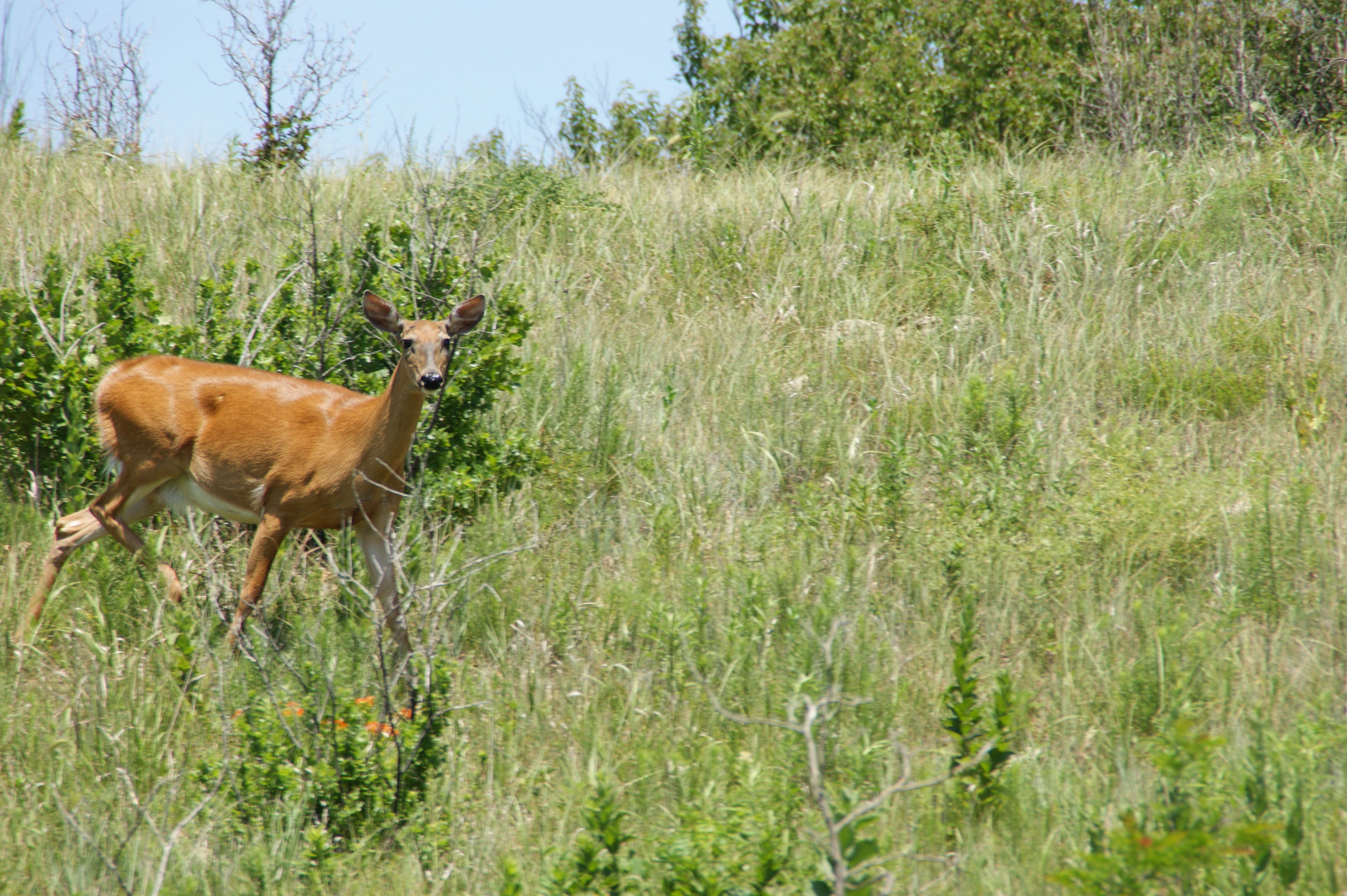
A young buck who was nice enough to pose for me

A young buck who was nice enough to pose for me


Reality Ranching October 2013

Hello,

     We finished calving out the Rock Hill heifers on October 15th. All but 3 heifers had calved by September 27, just nine days after the actual due date for this group of heifers. Those of you who run a breeding herd know this is pretty phenomenal! Of course the last heifer to calve always seems to drag her delivery date out as long as possible.

DSCF0019

1178 looking surprised. At least I think so.

     1178 was the number of the heifer who was the hold out in the herd. I dutifully checked on her 5 times a day and often I would politely ask her to get on with the show. Yes, I do talk to our cattle. 1178 would never respond to me thank goodness, but occasionally she would at least raise her head and look at me with mild surprise. O.k. this heifer always has a look on her face of mild surprise so this meant nothing.

    When I say 1178 would raise her head at my spoken word it is because she was always eating when I was checking on her welfare.  1178 was either grazing on the brome or filling her mouth with hay from a big round bale that was always available for the heifers. The reason I mention this is that often 1178 was eating when the other cattle were lying down or just chewing their cud. I don’t think I ever saw her on my heifer checks when she wasn’t eating! To put it bluntly the heifer is a glutton.

    As the days pass and the heifer continues to gorge herself she grows more rotund. When I feed this small group of heifers their alfalfa in the morning, (all the rest are pairs by now), 1178 waddles up and inserts herself into the feed line where ever she wants, pushing the other heifers aside easily with her bulk. Well, this heifer can’t wait much longer or she is going to burst.

     There is a cold front bringing rain tomorrow and I tell Paul surely this will make the heifer deliver her calf. Often weather fronts cause cows to calve the day before or the day of the front. No calf makes an appearance today and when I check 1178 early the next morning she is still a bred heifer. However, I raise my eyebrows to see that she with the seemingly endless appetite is not eating and standing slightly apart from the rest of the group who are still bedded down. When I return to feed alfalfa after eating breakfast 1178 isn’t with the other impatient heifers waiting by the gate. As I scatter hay I watch the pregnant heifer walking slowly through the gate from the lower field. AHA!  I shut the gate behind the heifer in order to keep her in tighter quarters.

     By mid-morning our last heifer to calve is working on becoming a first time mother. The cold front has arrived and this calf will be born in a light rain. Paul and I keep an eye on 1178’s progress from the machine shed. We want the calving heifer to concentrate on the task at hand and not on us. 1178 has to work hard but when the calf’s head finally appears the rest of the birthing process goes quickly. Paul steps over the fence and examines the calf to make sure the placenta  isn’t covering the calf’s nose. We walk back to the house listening to the new mother as she fusses over her baby.

DSCF0021

1178 a month after calving. She is still a glutton

     My job is over after 45 days of heifer checks. Paul and Randall are just getting a good start on the 200 plus cows that are calving. The cow calving season is spread over 60 days requiring a once a day check. If the guys find a cow preparing to or in the process of calving they return later to look at the cow and make sure all is well.       

        Paul and I have been calving out heifers for 37 years and yet after all these years we always seem to encounter new problems. This year my wards seldom gave me the normal clues that they were preparing to calve. I would walk through the friendly creatures to find all of the girls munching brome or contentedly chewing their cud. Returning 3 or 4 hours later often there would be a new baby calf being vigorously licked by mom, or already on its feet greedily sucking down its first meal.If I saw any heifer switching her tail faster than her herd mates or maybe standing in a slightly stretched position I took it as a sign that she might be contemplating on becoming a mother. I would always walk and look at these heifers an hour or two later to find that my “observations” were usually wrong.

Fall in Kansas

Fall in Kansas

     On an evening trek, I notice 1185 standing a few yards away from her herd mates in a stretched position. I study her closely and see no other signs that she is preparing to give birth. I ask Paul to check her just before dark in case she really was showing a subtle sign of the onset of contractions. Paul reports back that 1185 is with the rest of the heifers and seems perfectly happy.

    The next morning I put alfalfa on the 4 wheeler and pull into the brome field at first light to feed and check heifers. I take a head count before I spread out the hay and find I am one animal short. It doesn’t take long to find the missing heifer, 1185, standing humpbacked and straining hard with nothing to show for her effort. Dang it, I should have gone out at bedtime for a night check but we have been getting along so well I have become complacent. Paul is filling feed buckets from the grain bin and I buzz up on the wheeler to inform him of the problem.

     As Paul opens up gates, I lead the herd near the brome field gate and scatter out the hay.  Paul and I go after the troubled heifer and shoo her in the direction of the group. Once she joins the hay munching heifers we usher 1185 out the gate and walk her up the lane to the working pens. After catching the heifer in the head gate, Paul does a pelvic exam to discover the calf is coming butt first its legs folded underneath its body. This is probably the worst way a calf can present itself for birth. We halter the heifer and let her out of the steel alley way and tie the halter to the fence. Paul only tries a short while to see if he can straighten the calf’s legs but the heifer is pushing against him so strongly he simply can’t do a thing. We need a veterinarian.

     I go to call Dr. B while Paul unties 1185 and leaves to chore because he needs to be somewhere (darned if I can remember where) at a set time. I call Randall to come as soon as he can as I am sure Doc will need help and I doubt I have the strength to assist her. Dr. B arrives before Randall so after the heifer and I circle the small pen several times, I manage to grab the lead rope and between we two women, 1185 is snubbed up to the fence. No she doesn’t like it and pulls back on the halter with all her might. Randall has joined us and I step away handing over the vet assistant role to him. Dr. B delivers the spinal block just in front of 1185’s tail head. This seems to immediately numb the heifers muscles allowing Doc to begin the tedious and laborious effort to pull the calf’s hind legs straight. Dr. B is literally reaching into the heifer up to her shoulder as she tries to grip and realign the calf’s leg! Finally Dr. B gets one leg straightened and places a small chain around the ankle. Randall grabs the chain and pulls up to keep a steady pressure on the leg. This allows Doc to find and straighten the remaining leg somewhat quicker and easier. This leg is fitted with a pulling chain, Randall hooks the chains to the calf puller and with the heifer straining to help the calf is finally delivered.

    Because of the difficult birth and the fact that the heifer had been in labor too long the calf is dead.  As Doc is administering uterine boluses and antibiotic to the heifer I am studying the calf. There is something weird about him. The calf’s front legs are curved into a backward c and the legs look too short. I mention this to Randall and Doc and once Dr. B finishes attending to 1185 she walks over to examine the deceased calf. Reaching down she grabs a front leg and tries to straighten it out. It takes her no time to diagnose why the calf looks strange and she rattles off some long medical name to us. I ask in some alarm if this is a genetic problem and am relieved to hear the answer “no”. Dr. B  explains that in extreme drought there are certain plants ,when ingested at just the right time in the development of the fetus, will inhibit the normal development of the leg buds. Dr. B informs us that this is one of several calves she has seen in the past 3 years with this affliction. Only one of these abnormal calves was alive but naturally she had to euthanize the poor thing anyway. The fact that the calf was doomed regardless helps alleviate my guilt a little for not checking on his mother last night.

    It would be nice if this was the end of the story. Although 1185 was worn out and stressed our vet was confident that she would be alright. That evening she was lying down but was alert and got to her feet when I approached her. The next morning when I was looking through the group of heifers I couldn’t find her. I enlist Paul’s help in the search and he finds 1185 lying in a brushy corner obviously dying. The young heifer must have ruptured a vessel our vet couldn’t detect or perhaps it happened later when she expelled her afterbirth. Needless to say we all feel terrible about losing the heifer. DSCF0030

     We will leave this sad story behind and move on to a more humorous one. The term first calf heifer is an obvious one; it describes a heifer who delivers her first calf. First calf heifers can be frustrating, ignorant, clueless, and exasperating and any number of descriptive labels you care to come up with. When you consider these new mothers are basically winging it with only instinct to guide them you must add words like amazing, protective and natural mothers. Some heifers are better than other in making the leap from calf to mom hood but all of them muddle through in the end.

      When heifers have a brand new baby the majority of them stay by their calf the first day even as they watch me scatter scrumptious alfalfa out for their herd mates. Don’t worry, I always save a few flakes and deliver it to the new mother. There are times when the young cow can’t fight the temptation of that leafy green hay and will leave her calf to eat, what in human terms, would be a rich dessert. 1177 is one of those weak-willed heifers and though her wobbly legged calf tries to follow his mom, he can’t navigate the small gully that has to be crossed to join the herd. I make note of the calf as he wanders a few steps down the ditch and beds down in a patch of grass.

      As I step out the back door for my mid-morning walk through the herd, I hear plaintive mooing coming from the brome field where the heifers reside. I have listened to cow talk all my life and I am betting that a calf has been misplaced by one of the novice mothers. Adding a sigh of my own to the forlorn notes of the unknown mooee, off I go to participate in an unplanned scavenger hunt.

     It doesn’t take long to spot the cow that is making all the fuss as she is walking aimlessly, occasionally sniffing the ground and calling with her fog horn voice for the misplaced baby. When I catch up with her I see that it is no other than the “greed over calf” heifer 1177. Well unless this calf has moved since I saw him 3 hours ago I know exactly where the baby is hiding. I imitate pathetic baby calf moos to get 1177 to follow me across the field to the ditch. Here I magically produce her calf out of the brown grass and watch the mother fuss and snuffle over her baby who doesn’t seem to understand what the big deal is.

    That evening as I step out the back door I hear a familiar sound ringing across the brome field. Are you kidding me? Sure enough when I stride through the field towards the complaining cow it turns out to be 1177. I don’t even have to cry like a baby calf as my success this morning seems to have given 1177 assurance that I will take her right to her calf. As the silly heifer follows me, I scold her for her inattentiveness and tell her that this time I don’t have any idea where her baby is. This doesn’t seem to faze her at all as she plods along behind me like a dog on a leash. I go to where I left the pair this morning in hopes the calf didn’t stray far. I walk the small gully until I come to the water gap and there is the awol calf. He has crawled through the loose wire and bedded down in a small depression. I push the calf back through the fence to his appreciative mother who again fusses and talks to her wandering progeny.

The fence crawling calf at 2 months

The fence crawling calf at 2 months

     This is ridiculous; I’m beginning to think this heifer suffers from short-term memory loss. The next day we go through this ritual again with 1177 broadcasting loudly for her missing calf, me wandering around with the heifer right on my heels. I discover the wayward calf on the wrong side of the fence lying in tall grass. What is it with these two critters, the calf seems to prefer adjoining fields and mom obviously isn’t keeping tabs on him.

    The next day I barely step into the field when 1177 falls in behind me vigorously encouraging me to find her calf. We search together with no luck so I begin to check through the baby calves that are lying around in a loose circle. There is the “missing” calf hanging out with his buddies and he is not near as enthusiastic as his mother is at being “found”. I am beginning to feel like I’m being played here. When a couple of days pass with no cries of alarm from 1177, I assume our search and rescue sessions are over.

Fall in Kansas

Fall in Kansas

      Oh no, there is 1177 pacing next to the fence I always crawl through to enter the brome field when I go to check for calves. The agitated cow is walking back and forth, bawling loudly and looking over the fence. I assume the calf has weaseled through the wires again so I begin searching the thick tall grass for the trouble maker. I come up empty and tell 1177 that if he is out here I can’t find him. I duck under the fence expecting the usual fall in behind me position of my bovine companion. Instead the upset cow trots ahead of me unleashing her loud unmelodious calls as she goes. I follow her as she runs to the edge of the field and stops by a calf standing near a large oak tree. As I draw near I can see the calf is partly through the fence and has a front leg lifted off the ground. When I reach the little bugger I see that he is pulling back against a strand of barbed wire that is wedged behind his knee. If the bull calf would have walked forward instead of pulling back he could have remedied the problem of his entanglement on his own. With mom watching me expectantly, I get behind the calf and push him forward and voila, he is free as a bird and with nary a scratch to show from his predicament.

     I know what you’re thinking or at least I would if I was reading this. This is a surely a fanciful tale but I assure you it is not. There is no doubt 1177 lead me to her calf that was stuck in the fence. My question is was she pacing that particular fence waiting for me to make my appearance??

     We moved these heifers and their calves shortly after this episode to a larger brome field. Paul, riding the 4 wheeler, would look at this group every day after he had finished his rounds through the calving cows. One day after helping Paul build an electric fence I decided to walk home. To get home I walk over a meadow, through some woods, across the gamma grass field into the large brome field where the group of first calf heifers is.

     The satisfied cows are grazing on the brome and pay little attention to me as I walk through the lush grass. When I reach the lot where the cattle must come for water I hear the distinct crunch of hooves behind me.  I stop and turn to find 1177 gazing placidly at me. We look at each other than I take my camera and snap a photo of this rather unusual cow. I crawl through the fence and see some alfalfa along the edge of the bunks where the cattle were fed this morning. I pick up the hay and call to 1177 who walks through the gate and I reward her with the hay. Maybe that is what she was after all along or perhaps old habits die hard. 

1177 posing for photo

1177 posing for photo

     Coming soon in a reality ranching, “Paul, Randall and Nancy’s, more adventure than we ever want all in one day”. Later, Nancy


Cow with cute twins

Cow with cute twins


Reality Ranching August 2013

Reality Ranching August 2013

    Hello,

        I am reminded daily by the chorus of cicadas and the gathering flocks of blackbirds and swallows that summer is slipping away. What a difference a year can make as our weatherman reported that the average temperature for July this summer was 11 degrees cooler than last summer and several degrees cooler than the “norm” for July.

      From June to mid-July it appeared we were again going into a drought as crops began to yellow from the lack of moisture. Paul and I left Kansas on July 19 to rendezvous with his sisters on the East Coast. The day after we departed the state an inch of rain fell on our parched corner of Wabaunsee County. I believe we heard the sigh of relief from farmers and ranchers all the way to Cape Cod.  The cloudy, cool, wet weather persisted in our county until the 10th of August. This is very unusual for late July and August as it is typically our hottest and driest part of summer. Although many areas around us received heavy rains that filled up receding ponds and brought creek levels high enough to take water gaps out that wasn’t the case for our corner of the county. Nevertheless, we look as green and lush as if it were early spring!

Rock Hill Ranch in August!

Rock Hill Ranch in August!

    When Paul and I return from our foray out East it is time to round-up the steer calves, sell them and collect the ranch paycheck for the year. We have 40 steers to gather from various small pastures this last day of July.  Randall pens three bunches of cows on the south end of the ranch while Paul and I pen two groups on the north end. Despite the fact that we must sort and load calves from five different places everything runs quite smoothly. I don’t mean to brag, but gosh these calves look good.  When you consider the majority of them are out of first calf heifers it is especially pleasing.

   Once we load the calves into the three stock trailers it is time to “load” Dalton, Jake and Cousin Seth in the old, extended cab, Chevy. Paul leads our caravan of trucks and trailers, I am in the middle and Randall and the boys bring up the rear. We drive the 45 miles to the sale barn without incidence. At the sale barn there is only one trailer in front of us so we are able to unload the bewildered calves in good time. Now all we have to do is wait a couple of hours for the start of the cattle auction.

Going to the sale

Going to the sale

     When the sale starts we patiently wait and watch as other people’s cattle are paraded around the sale ring and auctioned off to the highest bidder. The boys, including three-year old Jake, are engrossed in the ritual of the auction.  I am sitting by Dalton and we discuss the total weight of the groups and what the average weight is of the cattle in the group. We also talk about why, at times, the ring men sort this or that animal out of a bunch of cattle.  We decide the men usually take a critter out because the animal is not black in color or because the calf is smaller than the other calves in the group.

Dalton, Jake and Randall watching the sale

Dalton, Jake and Randall watching the sale

     Dalton spies our calves immediately, due to their yellow ear tags, as they run through the open gate into the sale ring. The sale barn owners have sorted our calves by size and the first group of 23 calves weigh an average of 747 pounds. The steers look fantastic plus they are very calm about the whole process considering that a human being is chanting into a microphone while two strangers are herding them around the ring so the buyers can appraise them. The gavel comes down and the young auctioneer declares the steers sold at a price per hundred weight of 152.60. SONY DSC

    The sale workers bring in our 16 smaller calves which look good and behave well. These calves weigh an average of 644 pounds and fetch 163.25 per hundred weight. The owners of the sale barn concluded one of our calves, a twin, was too small to fit with any of our other calves so he sells last and alone.  We are pleased with the price both groups of calves brought. After watching the sale a few minutes longer we make our way to the office, pick up the check for the calves and return to the ranch.

    The following morning Randall, Paul and I head out with the three rigs to a pasture we rent west of Alma. We carry portable panels in one trailer as we need to build a temporary corral in order to pen the cattle that are in the pasture. Upon arrival at the pasture, Paul and Randall begin building the pen. I soon take Randall’s place and he leaves on the 4 wheeler in the quest of finding the cows. Once we have all the panels set up, Paul pounds steel posts in at pressure points to give strength to the structure.

    It is a beautiful morning without a breath of wind so sound carries from a great distance over the prairie. I listen to the raucous call of a blue jay and am delighted when the crisp “bobwhite” of a quail reaches my ear as I so rarely hear them anymore. A red-tail hawk screams in the distance while a phoebe repeats its name over and over. Randall adds his voice to the chorus with “come co o o ws” or “come on gi r r rls” and is answered with moos and bawls from the cows and calves. I can gauge  Randall’s progress to the pen as his voice becomes louder and now I can hear the rattle of the cubes in the bucket. Soon the idling motor of the 4 wheeler is apparent interspersed with the crunching sound from the hooves of 44 head of cattle as they cross the gravelly creek.

Building the portable pen

Building the portable pen

    Randall drives the 4 wheeler right into the make shift corral and most of the greedy critters follow him without hesitation, gobbling up the grain cubes he sprinkles on the ground. A few calves and cows stop at the mineral feeder but Randall continues to call and soon all but one cow have unwittingly marched into the steel circle. We don’t care about the cow anyway as we are just after their beautiful heifer calves.

    Separating the calves from the cows goes as well as can be expected when you are sorting cows back into the pasture while keeping the calves in the pen. The heifer calves don’t understand why they aren’t allowed to follow mom back into the pasture. Once we have accomplished splitting the cows from the calves, we load one large trailer with heifers and put the remaining calves in the front compartment of the other aluminum trailer. The 4 wheeler is loaded in the back compartment. We tear down the pen placing the panels back into the small cattle trailer. Wow, I can’t believe how well that went and how fast we accomplished all this. As I am getting ready to crawl into the Ford, Paul is doing a tire check on the trailer of his rig. Blast, he has stopped by the right front tire and I can tell by his demeanor that our luck has run out.SONY DSC

     The guys gather the jack, tire iron, spare tire and a tire ramp and get to work. Paul backs the trailer up and runs the rear inflated tire on the ramp. This lifts the flat tire high enough off the ground making it possible to get the hydraulic jack underneath the trailer. The lug nuts screech in protest but somehow Randall manages to loosen and remove the stubborn things. The guys, well mostly Randall, have the tire changed in 20 minutes. We head for home and unload the heifers in the lane south of our house where we will listen to them bawl for mama for three to five days.

    This afternoon I get to visit the dentist which just thrills me. Randall and Paul will be calling cows into various lots as we are shipping the 65 steer calves we sold on Superior video auction in early July, to Minnesota tomorrow morning. When I get home Paul reports that things went so well getting the cows into the smaller lots it was scary. It makes us wonder with all our cattle activities going so smoothly thus far if everything that can go wrong will happen tomorrow!

    Paul and I are out the door literally at the crack of dawn where we are greeted with a barrage of bawling heifer calves, calling for their mothers. We take care of this group of calves who come readily to eat the pellets that Paul pours into the metal bunks. These calves were fed the same pellets through the winter so they know what is happening when Paul appears with buckets in hand. Weaning calves is so much easier if they already know how to eat grain out of a bunk.

The heifer calves realizing they can live without mom

The heifer calves several days after weaning

    Paul and I go to the Schwanke farm and using the old bucket and pellet trick call the cows from the large lot into the calf creep pen. We leave them munching on cubes and drive back to Milton’s place where the cattle are already penned in the large calf creep area. Paul again plays pied piper with his magic bucket and I follow the herd of cattle as they trot in anticipation into the next pen. Randall, who has been corralling the cows at his house, arrives and helps us move the cows into the load out pen.

    We sort the cows off the big steer calves without making a mistake. That means no calf managed to run by us and escape into the bigger pen with the cows. Our three cattle trailers are then loaded with these big boys and we haul them a mile down the road to a neighbor’s roomy loading pens. We use these pens because it is easier for a big semi to maneuver while backing the huge trailer up to the loading chute plus the pens are right next to the highway.

The rigs we use to haul cattle

The rigs we use to haul cattle

     We go to Randall and Erin’s next where we sort and load 15 hefty steers and deposit them with the 39 steers that are walking the perimeter of the pen. One group left to get and the sky is beginning to look rainy. We head south to Schwankes and drive the herd into the small sorting area. There are 16 calves here and once we have them sorted off these calves join the rest of the Minnesota bound steers. As we leave the yard it begins to sprinkle and in the east a vivid rainbow appears. Unfortunately, I didn’t bring my camera because of the dreary weather and hurried pace of our morning.

    We have penned, sorted, loaded then hauled seventy steer calves to the neighbor’s pens in less than two hours. I’m impressed with our efficiency. The truck is due to arrive at eight thirty and we have the calves in place by 8:15. The beautiful rainbow has now become a double rainbow. How can you beat that!!

    I study the group of 70 steers and have the satisfaction of thinking it will be tough for Barrett to sort off 5 head to meet our contract of 65 steer calves. I see one steer from the Schwanke calves that I don’t care for so I stop him from joining the other calves, holding him in the small pen where the calves come out of the trailer. When Barrett arrives he walks through the calves casting his professional eye over the milling steers. He picks out two calves that are on the smaller side but still good calves and we sort them into an adjacent pen. Barrett walks through the 67 remaining steers, shakes his head and returns to the three of us. He tells us he is going to see if the truck driver, who works for the feed yard where the steer calves are going, will take the extra calves. The driver says there is room for two more so that is settled. The driver gives us the number of steers he wants for each compartment of the truck and we count them off, sorting them into the load out pen.  The large, healthy calves give little resistance when Randall, Paul and Barrett herd them down the chute and into the truck so we are finished in short order.

     Randall and Paul load the three rejected calves into one of our trailers where Randall and the boys will haul them to the sale at Manhattan. First, we all follow the semi to Alta Vista Coop where we weigh the calves on the truck and collect our paycheck. We contracted our calves at a weight of 750 pounds but they surpass that number and weigh in at 778 pounds. That weight is after the 2 % shrink that is also in the contract so that means the calves actual weight was close to 800 pounds. WOW. This also means that the price we received during the auction will be less as the buyer was bidding on 750 pounders not 780 pounders. That’s o.k. as more pounds to sell are always a good thing. Barrett writes a note to the new owner of the calves suggesting that he place our calves in his corner pen next to the road so all his neighbors can see them as they drive by:). I guess that tells us that Barrett is quite pleased with the black steers himself.

   So our yearly payday (an oxymoron I guess) is over.  I always tell the worried mama cows when we wean the calves ( knowing full well they have no clue what I’m saying),  “don’t worry you will have a new baby to care for in a couple of months and you should be relieved to get rid of those big rascals you are caring for now”. That of course means we too will be starting this cycle all over again in a couple of months and I can’t wait to see baby calves kicking their heels up in impromptu races on a frosty morning.   Later, Nancy

I couldn't resist this photo

I couldn’t resist this photo


June 2013 Reality Ranching

June 2013 Reality Ranching

    Since I don’t have photos to match some of my ramblings, raccoons or birds, I will just use some favorites I have snapped lately.

Late evening looking over a field of brome

Late evening looking over a field of brome

       What a spring we had this year and boy did nature respond in a splendid way. The cool weather punctuated with timely rains sent the tame (planted) grasses in our part of the world into a lushness that we won’t soon see again. The rains weren’t gully washers, at least not in our corner of Wabaunsee County but when they fell the moisture was used to its fullest due to the fact that searing winds didn’t suck it away the next day. However, the native grass in our pastures already stressed from the drought, did not like the cool nights. It needed warm night temperatures to grow and even now the prairie grass is shorter than we like to see it this time of year. Our brome grass is as beautiful and plentiful as we can ever recall. Paul walked into some hay fields where the seed head on this tame grass tickled his chin. To make it even more amazing the brome continues to stand up instead of lodging (falling over) as tall brome normally does. There will be no shortage of hay harvested in our county this year.

Black-eyed Susan's and butterfly

Black-eyed Susan’s and butterfly

    The wildflowers this spring have pulled out all the stops. They are blooming profusely and in abundance in pastures, meadows and roadsides. The butterfly milkweed sets the roadsides ablaze with their flaming orange flowers. The flat heads of yarrow are the color of dirty snow. We have fire and ice in summer courtesy of wild flowers.  Sprinkled through the pastures are yellow goat’s beard, the catsclaw’s sporting a purple globe, the stately white moth mullein, clouds of daisy fleabane, black-eyed Susan, bell-shaped beardtongue and a variety of milkweed and others too numerous to list.  Mother Nature has painted a masterpiece for anyone who bothers to cast their eyes over the green canvas of a hillside or meadow. Sadly, I simply cannot capture the magnificence of nature’s offering in a photo although I certainly have tried. The close-up photos are lovely but my photos trying to capture the flowers spread across a meadow just doesn’t do natures art work the justice it deserves.

Goat's beard

Goat’s beard

butterfly milkweed

butterfly milkweed

Black-Sampson echinacea

Black-Sampson echinacea


     Since I am on a nature theme I might as well comment on what seems to me to be a high density of birds this spring. We put up 5 bluebird nest boxes this year and all but one were occupied for at least one hatching. I know I have never seen so many Cuckoo birds as I have this year. Usually one is only aware of cuckoos as their “chuckling” (Paul’s description and very apt) rolls out from a woody area. I seldom see cuckoos flying but this spring I have watched these secretive birds on the wing quite often. Great crested flycatchers were so thick earlier that when I was out walking there seemed to be one announcing its presence from a tree every few yards. Driving from the 99/4 junction south of our house, cliff swallows have taken up residence under every large bridge plus the I70 overpass on the trip to Wamego. These graceful swallows build gourd shaped mud nests and attach them to the underside of the bridges and the underpass. The colonies that took up residence under the bridges have chosen wisely but the flock that built their nests beneath the overpass not so much. The swallows always swoop downwards when they leave their mud abodes. Driving to Wamego one day I watched in dismay as a swallow exited its conical nest and flew directly into the windshield of a passing car. I don’t know what kind of survival rate their young will have when it is time for the fledglings to leave the nest. 

     Speaking of birds I must relate this rather poignant story of a pair of Purple Martins that visited our marten house this month. I have been hoping these large swallows would discover our martin condo for three years now. I was so excited when I heard the beautiful warbling of a male martin earlier this month. When I saw that he was singing while perched on top of the white bird house, my hopes for martin occupation soared. As I spotted a female marten flying in circles around the area I was doubly happy. The female never joined her male troubadour on the house roof however and the next day no marten was to be seen or heard.

     Two days later the male marten was back singing at the top of his voice. I watch curiously as he takes wing and flies over to the old windmill settling on a metal rod. Looking closer I see that the female martin is perched on the same rod. The male emits another loud, exuberant, chattering melody.  The courting male flies back to the bird house roof and chortles his sweet nothings to the female who sits with her back to the marten house. I watch that persistent male repeat this ritual six times, singing from the house and then flying to the windmill to warble in his chosen ones ear. The unimpressed female never even turned her head to glance at the proffered abode. The male was still carrying out his back and forth sales job trying to convince his chosen mate that this is the place for us, when I went inside my own house!

What more could a bird want?  You can see the Marten house to the right of building

What more could a bird want? You can see the Marten house to the right of building

     Again the disagreeing couple disappears for a couple of days but then I spot them both sitting on the balcony of the bird house. I was jubilant, sure that this meant the start of a colony of martens. The next day they were gone again and I haven’t seen them for a couple of weeks. Perhaps they were scouting for next years nesting spot and when they return spring they will bring friends along to reside in our rent free martin house.

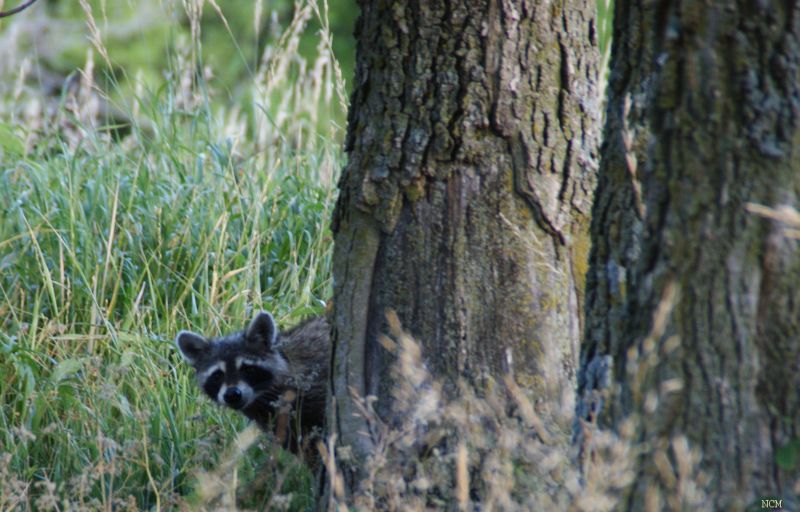
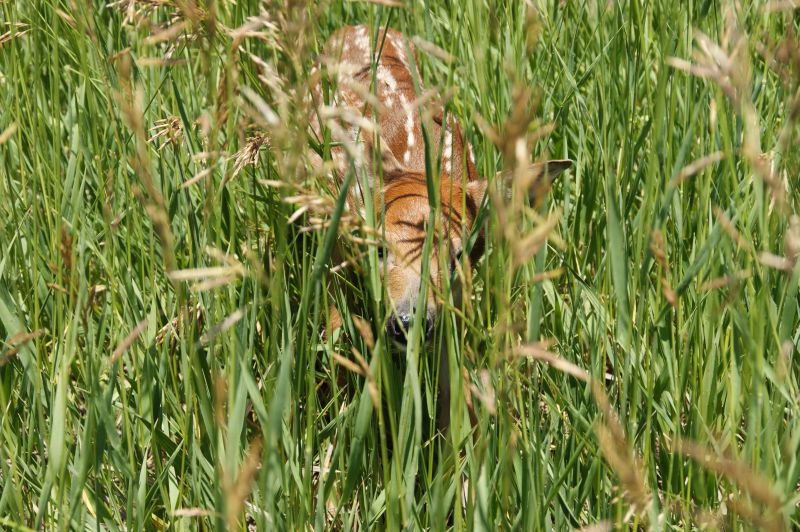
   As usual our yard and surrounding land are alive with wildlife. Turkeys wander up our drive way occasionally. We have a doe that has taken up residence close to the house. I have seen her near the big bales east of our house several times and once she was standing by the water tank in the south lot. Paul has seen her several times close to the garden. I’m sure the doe has a fawn tucked away somewhere and perhaps she thinks that being close to a human dwelling will keep the predators away. I’m afraid that is a false hope as I have seen coyote scat in our driveway too. There is a gangly raccoon that has taken to walking along our sidewalk as dusk begins to fall. I imagine he checks the area where I toss scraps from the days cooking and then proceeds to use the easiest path to continue on his quest for food. There are a couple of Greta the groundhogs around but as of yet no little Greta’s have made an appearance. Rabbits, o’possums and squirrels round out the menagerie.

Doe that hangs around our house

Doe that hangs around our house

   One evening as we sat in the sunroom Paul announces that a mother and two baby raccoons are running through the yard. I had been looking out an east window, watching Taz stalking a couple of rabbits. The rabbits were so concerned about her ability to catch them that they were leisurely nibbling on the buffalo grass. I rush to a south window to locate the trio of coons but I only see the mothers rear-end disappearing behind the evergreens in the corner of our south lawn. I get my camera, slip clogs on my feet and go in pursuit of the raccoons. When I reach the cedars, I peer up into the branches and listen for coon chatter but cannot locate the critters. I decide they might have scurried down to the creek so I follow the lane which leads to the stream with Taz trailing behind me. I am waylaid for a few minutes by the aforementioned doe standing near the water tank. The sleek doe snorts and runs at the sight of us but she stops after a short distant and turns to take a look at this odd pair.  We stare at each other for a few seconds, and then the lovely creature loses her nerve and bounds away for good.

    Once we reach the creek, I use a tree for cover, peering around the trunk looking up and down the creek. Taz sees no reason for this subterfuge and saunters up to the edge of the bank looking around with her usual curiosity. I do see a raccoon many yards away and watch as he dashes to and fro in the water. I assume he is after frogs or crawdads for his supper. There is no sight of the raccoon family darn it and the other raccoon is too far away for a photo.

Golden Dragonfly

Golden Dragonfly

     Returning from checking cattle one morning this week, I spy those cute little raccoons near the pickup shed. Jumping off the 4 wheeler I remove my camera from the case (yes I take it along when I check cattle) and walk towards the duo. There is no sign of mom which seems odd but her absence makes me feel a bit safer in stalking the masked visitors. When the two truants see me walking towards them they run into the tall brome grass that is growing next to the shed. The baby coons disappear into the dense grass but I follow their progress by watching the top of the brome ripple as they scamper away. The youngsters stop at the base of a big oak tree and I smile, readying my camera for that imagined great photo I will take as they ascend the trunk. I wait and wait but no climbing coons appear to pose for my photo.

     I walk over to the tree when suddenly I hear something crashing through the grass directly behind me. My heart begins pounding as I turn towards the racket assuming I will be facing an enraged mother raccoon. “ TAZ, you scared the heck out of me!” Silly cat.

     I turn back to search the base of the big oak but there is no hollow near the bottom of the tree where the babies could be hiding. Hmmm. I traipse through the thick grass looking for telltale ripples of escaping animals but nothing. How could the rascals have escaped without my seeing them? I can only conclude they ducked under the bordering fence into the field where the grass is much shorter and pulled a Houdini on me by running next to the big brome instead of in it. I am disheartened by losing the photo-op but encouraged that if the mother raccoon has met her demise maybe these possible orphans are just smart enough to make it on their own.

One of the collared lizards that live in Paul's restored stone fences

One of the collared lizards that live in Paul’s restored stone fences

     Later, Nancy


Reality Ranching May 2013

Reality Ranching May 2013

     Hello again,

       I am sitting in the sun room (although there is no sun) watching various birds hungrily consume the sunflower seeds I provide for them. Among them is a white-winged dove which is a rare sight in Kansas according to Sibley’s guide-book. I have only seen a white wing dove one other time in our yard about ten years ago.

White--winged dove  See the narrow band of white where it's wing folds?

White–winged dove
See the narrow band of white where it’s wing folds?

     Normally I would have stopped feeding the birds a month ago but it has been so cold and miserable in Kansas this spring I feared they would find little to eat. I am worried about the migrating insect eaters too. I saw a pair of barn swallows this week flying low to the ground brushing up against grass in hopes of scaring an insect into flying. The last time I saw this phenomenon (ten years ago?) purple martins, swallows and other insect eaters died of starvation. I have only observed a few swallows so far but the martins have been here for a few weeks and I don’t know what they are finding to eat.

     An update on purple martins, I was in town yesterday (May 10th) and there were purple martins everywhere thank goodness.

     In my last reality ranching I talked about the late March snow we had and how jubilant we were that nothing had calved during the night of the storm. Now the rest of the story!

This photos was taken the end of April. We had another snow on May 2nd. Come On!

This photo was taken the end of April. We had another snow on May 2nd. Come On!

    After we had finished feeding the rest of our cows, Paul took the tractor in order to haul a large round bale of straw to the pasture where our spring cows reside. His intent was to unroll the straw providing a thick layer of the golden wheat stems for the cattle to lie on and to provide a warm dry place where a cow could calve if she was smart enough to use it. I was glad to be back in the house out of the cold wind but it wasn’t long before I was pulling on my chore clothes and heading outside.

    Paul had called on the two-way radio telling me to open the gates into the lane south of our house as he was bringing home a new-born calf that was very cold and so far the cow was following behind the tractor.  Less than four hours had passed since we fed this herd of cows! Evidently the cow decided she wanted breakfast before she gave birth. We had looked the cows over carefully when we fed them and were convinced nothing showed signs of calving. Mature cows however do not give nearly as many hints about an upcoming birth as a first calf heifer.

    Paul laid the frigid calf in the tractor bucket which he had lined with straw. This meant that he had backed the tractor all the way from the pasture to the house, a half of a mile at least. The cow needed to see and smell her calf so she would follow the tractor thus the backward trip.

     I hadn’t anticipated that the calf would be in such bad shape so was surprised to see that the poor thing was rigid and in shock. Paul fired up the small propane heater in the shop. We laid the cold calf on old t-shirts directly in front of the blast of hot air blowing from the portable furnace. I began rubbing the calf down with more discarded t-shirts that Paul uses in the shop for rags. The calf’s legs were stiff as boards and her eyes kept rolling up in her head. My vigorous rubbing would bring some positive response from the half-frozen calf and she would try to focus her eyes which gave me hope. When I stopped massaging my patient, her eyes would roll out of sight and she would arch her neck towards her back. The poor little thing.

    By the time Paul and Randall returned from spreading straw out for the spring cows, I gave the care of our weather victim over to them. Frankly, I was worn out plus I tweaked my back while being a calf masseuse. By the time I handed the calf’s care over to the guys, I was able to bend the knees of little heifer and could prop her up on her stomach where she was able to hold her head up somewhat. Amazing!

    Randall and Paul eventually tube colostrum into the calf once she became fully alert. Not long after this the calf was able to stand shakily on its own. Keep in mind the process from putting the calf in front of the heater to the calf standing was probably five hours.  We placed the calf in a small pen under the shed with her high-strung mother by late afternoon. Paul and Randall caught the cow in the head stanchion, yeah that was fun, and worked with the calf teaching her how to nurse mama. By the time they were done the thawed out baby was picking up mammas teats on her own and her tummy was bulging with warm milk. I love happy endings:). Well, she did eventually lose the tips of her ears but that just allows me to pick her out among the other calves and remember how close she came to losing her life.

The half-frozen heifer calf. Her ears are still a bit raw

The half-frozen heifer calf. Her ears are still a bit raw


Working calves

    We had a rare warm day this spring on Good Friday and we took advantage of it by working two groups of cows and calves. The calves needed to have booster vaccinations and their EID tags (electronic individual identification) placed in their ears. The cows were to have blood drawn so we could send it to a lab and check to see if they were pregnant.

    It just happened to be that Randall and Erin’s oldest son was home from school so we have an extra hand today. Let the fun begin!  Dalton isn’t allowed to help us as we sort the calves into a separate pen from their mothers. Once we begin running the cattle down the alley and catching them one at a time in the chute the little cowboy is welcome to lend a hand as long as he stays on the outside of the pens and alley.

    We work the cows first and our job assignments are Paul running the squeeze chute, Randall pulling blood, I help encourage a cow to enter the chute plus record on the paper forms the cow tag number next to the tube number that contains her blood. Dalton helps by reading the cow’s tag number out loud and for a while, he writes the tag numbers on the paper. For a kindergartener who is turning six in a couple of days he does a darn good job. His enthusiasm for recording cow numbers weakens after a dozen cows but if a cow is in the chute whose tag number contains a 5, one of his favorite numbers to write, he takes over my job again.

     Dalton is impatient for us to finish with the cows as he wants to help us coax calves down the lane and into the chute. The old cows just don’t pay much attention to the little guy and I think they scare him just a bit. Why not when the big mammas tower over you and outweigh you by a good 1200 pounds or more!

     Our jobs shift when we start working calves as we adults all need to work by the chute. I am changing needles on the syringes and recording the calf tag numbers on the Eid sheet. Paul and Randall are giving vaccinations and snapping the eid tag in the calf’s ear. Dalton turns out to save us a lot of steps as he is quite adept at poking the calves with his own sorting stick in just the right place that makes them move forward. If you prod them to far up on their side they will back up but if you prod them in the middle of their side, generally they will move ahead. Randall is there to move them on into the chute and Paul catches their head in the

 I have no photos from working cattle that day. Look at that concentration

I have no photos from working cattle that day. Look at that concentration

head gate.

      Dalton on occasion takes a break which means he might sit down on a big flat rock not far from the action for about 20 seconds. Or he may run to the house and practice his jump shot a half-dozen times for a change of scenery. For the most part he is a steady and enthusiastic worker and we hear him say several times through the day “I love working with you guys”. Oh to hear those words in ten years!

     When we have finished the first group of 35 cows and calves we take them back to the pasture and return to work another group of 36 pair. As Paul turns the truck into the meadow I ask sweetly “why are you driving in here”? O.k. I snap the question as I am already tired and we have another 70 head to work. Paul replies that we need the truck in here to lead the cows back to the pasture. I quickly point out that we haven’t worked them yet, to which he replies that the pickup will be in place to lead the cows back to the pasture once we are finished working them.  I sit there trying to come up with a retort to that sensible reasoning. Dalton, who is sitting between us sipping on a soda, has been following these terse exchanges like he is watching a tennis match. He takes advantage of the quiet and pipes up saying “You have to give her a second”. I burst out laughing and Paul who didn’t hear Dalton’s statement asks me what he said. When I relay the perfectly timed one liner, Paul joins me in laughing and says something like I’m glad you said that and not me. I was laughing so hard I never took note if Dalton joined in or not. Are you sure you are just going to be six years old Dalton?

     When a smaller calf comes into the calf cradle, I know by his tag number that he is sired by a Simmental cross bull. I announced to the guys that this unimpressive calf is out of a Simmental bull. Dalton in a puzzled voice says “semi-tall, what does that mean, really short”? Our laughter rolled out across the cow lot and poor Dalton had no idea what was so funny. When we adults regained control of ourselves, dad explained to his son that a Simmental is a breed of cattle. I’m laughing all over again!

   When we finally finish with our cattle work and are preparing to lead the cow herd back to the pasture, Dalton stretches and comments with incredulity that we have been working cattle for six hours. I’m not sure where he came up with that number but I’m pretty sure he could add on a couple more hours. I think the little guy slept pretty well that night.

       We sold 30 pair of our herd in April consisting of all cows over 10 years old plus the cows that were not pregnant. The pastures need some respite from the past two years of drought and most people we know have cut back 15 to 30 % on their stocking rate. We too, are protecting the grass in our pastures and this is the reason for reducing our cow numbers.

This photo was taken on May 11th. The grass is growing slow due to our cold spring.

This photo was taken on May 11th. The grass is growing slow due to our cold spring.

    We have received enough rain to put water in our ponds and start even small streams running but to think the drought is over is premature. That said things are so much better than just two weeks ago it feels like a huge weight has been lifted off our shoulders. Now we just need warm nights to get the grass growing in our pastures. We turned most of our cows out a week to two weeks later than normal in hopes of giving the grass a head start. Our mornings of feeding hay are over but soon we will begin harvesting hay to get ready for next winter! Later, Nancy

   P.S. Paul finished with his winter fence project Sunday May 12th.  It looks fantastic.


Paul giving the cowabunga thumbs up and down sign.

Paul happy his fence is finished


Reality ranching April 2013

Hello,

      I have let this reality ranching sit in the computer for nearly a month so the next two paragraphs are last-minute additions (now days!).

     It is the 24th of March and Paul is out plowing snow out of various driveways! Our small spring cowherd is calving now. We calve out our spring cows late in March to avoid snowstorms. HA!! Now I remember why I hate calving in the spring. Eight of our twelve first calf heifers have already calved and I wasn’t worried about the four left to calve as we have a shed we can put them in. Still it wasn’t fun to go trudging out there at 10 p.m. last night in the blowing snow to check on their welfare.  Paul unrolled hay last night for the twenty mature cows, five of them with 1 to 4 day old babies, in a deep draw out of the relentless wind.

first calf heifers calves enjoying a bed of hay

first calf heifers calves enjoying a bed of hay

      We went to feed the spring cows first thing this morning driving through drifts that were formed from the 6 inches of snow that fell in the night. We found 20 cows and 4 calves standing and laying where Paul had fed them last night. As we searched the brush piles for the missing baby I saw numerous coyote tracks in the snow and I was not feeling optimistic we would find the little calf alive if at all. Just when I was facing the fact that the calf had perished, I heard a plaintive bawl and turned to see Paul picking up a snow-covered calf a good thirty yards south of the cows. The calf was lying next to a dead branch basically in the open which gave it no protection from the snow.  When Paul first saw the recumbent calf he was sure it was dead.  I suppose the cow thought it was a good place to hide her baby and left him there for the night. This mature cow goes in the books as a darn poor mother as cows with new babies always stay by their calves at night. If it had been colder than 27 degrees I’m sure the calf would not have survived. As it was we got the calf together with its dimwitted dam and when it began to nurse we knew the baby would be feeling much better once its belly was full of warm milk. Oh yes, nothing calved last night thank goodness!SONY DSC

    It is March and as usual I don’t know how the winter months went by so quickly. We continue to worry about drought although we received one nice rain in January and one big snow in February. The foot of snow we received is equal to 1 inch of rain and we would need 17 feet more of snow to catch up with our deficient moisture according to our weatherman! Thanks but I would prefer to catch up with rain although we will take moisture in any form.  Since I wrote this paragraph we had an inch of rain a week or so after the snow. Not much help for our ponds but still every little bit is welcome.

    Due to the shortage and expense of hay this winter we are being very frugal when feeding the cows. We try to feed no more than what each bunch of cows need even though saving a fourth or less of a large round bale seems stingy. However, four quarters equals a whole bale and a large round bale of brome is easily worth 80 dollars. We feed 8 big bales everyday so we can’t afford to overfeed. With snow on the ground and cold temperatures this past week we have been feeding the cows that last 200 or 300 pounds as they need extra hay to make up for the energy they must expend to keep warm.

     Speaking of hay we were struck in January by hay thieves. Ironically, they stole hay from the same farmstead where our cattle were stolen a few years ago. Unlike the cattle the prime 4th cutting alfalfa was not recovered. The bums cut the fence, yes we had the gate locked, and loaded up 40 to 50 small square bales. So to add insult to injury they left us (well Randall) with a fence to repair too.

     Because we were so dry in August most of the alfalfa wasn’t tall enough to harvest but there were areas in our fields that had some taller growth. Paul decided that it was worthwhile to mow this better alfalfa and spent a lot of time running around in the fields cutting these patches. When he was finished Paul had 100 square bales of prime alfalfa for all his trouble. It was beautiful hay and in this high market it is easily worth 10 bucks a bale. That means the thieves made 400 or 500 dollars for their crime. It probably took them 20 minutes to load the bales up while Paul spent hours putting the hay up. Grrrrr.

  CLEANING UP THE PRAIRIE

    We continued to fight trees and brush this winter in various pastures. Usually Paul and Randall would work at cutting and spraying the unwanted trees alone or as a team. A friend of ours who especially detests the water sucking evergreens spent some of his Saturdays in the fight against these woody prairie invaders. I got in on the fun twice when I helped Paul in the Brashe pasture and the Home West. Paul would lead the way girdling the trunks of the trees with the chainsaw and I would follow him, spray pack on my back, shooting a jet of herbicide into the cuts of the trees and basal spraying the clumps of brush.

    While the results of cleaning up our pastures are very rewarding, the physical exertion it takes to gain these results, at least for me, is tough. Paul must bend low when sawing the circular cut into a tree’s trunk, which is hard on the chainsaw operators back. The spray pack and its contents that I carry on my back sloshes and shifts with the lay of the land. If I walk uphill it tips me back, if I bend over or walk downhill my load slops forward.Missteps can send the liquid load and me sideways. The good news is that my burden diminishes with every tree or clump of brush I spray!

    Paul and I tackled the Home West one afternoon beginning our work on the south end of the pasture. The first ravine we start in doesn’t have many large trees but plenty of dogwood and buck brush for me to spray. Paul finishes well ahead of me and moves to the other side of the hill. When I finish annihilating the enemy, I walk along the side of the hill to join Paul. Anticipating that my spray pack will be empty (yes it is) Paul has left a jug of spray along the path I chose to walk. How did he know I would come that way? Again there is more brush than mature trees in this area. When Paul is done sawing tree trunks he takes over my job in order to give me a break.  I walk up the hill to the pickup and wait as Paul basal sprays the thickets of dogwood that are scattered along the hillside.

work done 2 yrs ago. Shows grass returning where trees had taken over

work done 2 yrs ago. Shows grass returning where trees had taken over

    When Paul returns to the truck we drive to the north side of the small pasture. This is where the worst infestation of trees and woody plants are and it will take many more afternoons of work to put this pasture right. After looking at the many possibilities we have to choose from, Paul settles on a draw near the middle of the pasture. The group of heifers that occupy this patch of prairie crowd around the pickup looking for hay despite the fact that they were fed this morning. The young bovines curiously watch as we fuel the chainsaw and fill up the empty tank with spray. As we walk away our audience remains clustered around the feed truck unwilling to accept that seconds are not going to be served.

    I think Paul started working on the south side of the Home East as a warm up for this densely wooded ravine. There are many mature trees growing in it and they are surrounded with prickly multiflora rose and big patches of dogwood. The ground is slick from a light rain we had last night and I find the footing treacherous at times. I often forget I have an extra foot of width on my back and when ducking under branches to reach a girdled trunk I often get stuck which forces me to back up and crouch lower to reach my target. The thorny multiflora rose snags my clothes as I fight my way through the vines grasping tentacles. My sunglasses have slid part way down on my nose.  A branch snags in such a way that when it releases it whipsaws and slaps me across the bridge of my nose. Ouch, I can feel beads of blood where the branch inflicted its damage. I know we will win the war but right now I feel like I’m losing the battle.

    My pack is becoming suspiciously light and I am far from the bottom of the gully. I trudge up the hill to the pickup where the heifers, some standing, some lying down have maintained their hopeful vigil. I pour more herbicide into the empty spray tank and head back downhill. I meet Paul who has finished scoring all the big trees. Paul offers to finish up for me and it is very tempting to hand the sprayer over to him but I shake off my lazy tendency and decline his offer. When I reach the bottom of the hill I have emptied not only the sprayer but my energy. Paul and I trek up the hill to the pickup heaving a sigh of relief as we settle into the dirty, worn seats. We are both tired and ready to call it a day. The herd of heifers reluctantly part to allow the pickup through their midst and as we drive away perhaps they finally realize we were never there to feed them!


STONE FENCES


Pauls winter project, finished and unfinished

Pauls winter project, finished and unfinished

Paul are you going out to work on the fence? I knew he was of course and I tell him he is crazy. It is a gloomy March afternoon with temperatures in the mid-thirties accompanied by a stiff, raw north wind. He has worked on restoring his fence in worse weather in the past. I believe it was two years ago that Paul went out to stack rocks as snow began to fall because the forecast was for several inches of snow and he knew that his “hobby” would have to wait until the snow melted. I believe I called him an idiot that time, half-jokingly of course. Our mailman, who is a childhood friend of Pauls’, was delivering mail that snowy day and stopped long enough to ask Paul if someone had dropped him on his head when he was a baby. Half-jokingly of course! This same friend often encounters Paul stacking rocks as he delivers our mail in the mid-afternoon and manages to come up with some sarcastic remark which Paul laughingly repeats to me. In the world of men these remarks are somehow an offhand compliment I guess:). At times our mailman throws a handful of miniature candy bars in Paul’s direction that makes Paul scramble after them like a kid at a small town parade. This is to my benefit as Paul really doesn’t care for chocolate (I know, crazy!) so the candy windfall is usually mine to consume.

    On the flip side of the good-natured ribbing Paul receives are the genuine accolades about his stone work from friends and strangers alike. If anyone asks where we live once we mention the stone fences south of Alma the universal response is “Oh, I know where that is, it is beautiful”. The unspoken compliments that Paul receives on his restoration work come in the form of the myriad of folks who stop to photograph or paint his restored fences. Paul likes to tell people if he had a dollar for every photo taken or picture painted of the stone fences the past 10 years we could retire. That’s right; he has been working on his project for 10 years.

   Paul set a big goal for this winter which is to finish the stone wall along the road leading to our driveway.  The unfinished length was 700 feet which might not seem that far until you know that a good afternoon’s work is 11 or 12 feet! We have had plenty of inclement weather that has slowed Paul’s progress down. Since we are approaching a very busy part of spring the days he will be able to devote to the fence restoration will dwindle. I’d put my money on Paul meeting his goal even if it means working on that fence through May.

   One more addition to this languishing reality ranching. Paul came in from laying up stone fence the other day declaring that he finally figured out what he had been doing wrong building stone fence all these years. I literally let out a lamented “Oh no, what is that” partly worried that my perfectionist husband was going to start rebuilding all his finished work! Paul replies “because I have been drinking water instead of whiskey all these years. What?  Then he shows me the old whiskey bottle he uncovered while digging out old rocks using the tractor and bucket that the original fence builders had left lay.

     How in the world this old bottle survived the past century(?) and then was not crushed by the tractor scoop is a miracle. After puzzling over the slightly mishapen neck of the old bottle for a couple of days it also dawns on me there are no seams. Plus the concave bottom has a center bead. Searching old bottles on the internet I confirm my suspisions that this is a hand blown bottle. I guess Paul was meant to find and rescue this relic possibly left behind from a past stone fence builder. Later, Nancy

Old bottle Paul found while working on stone fence

Old bottle Paul found while working on stone fence


Reality Ranching December 2012

Reality Ranching December 2012


    How can it possibly be December already, esp. when on most days our temperatures continue to feel as though it is early fall. Our drought continues although we were given a respite from the dusty dryness when we received nearly two inches of rain the first part of November. What a pleasure it was to breathe in the fresh fragrance of air heavy with moisture and to enjoy the squish of mud under our boots for a day or two.

A shrinking pool in the creek this fall

A shrinking pool in the creek this fall

   Near the end of November we began to question our eyes as the pools in the creek on the north part of the ranch appeared to be gaining water. As the days passed it became obvious that we weren’t imagining the water level rising as the pools filled up and small tongues of water inched their way along the dry creek bed. Every morning as we chored we took happy albeit amazed note as our creek went from an empty channel to one with enough water to run (sluggishly) through the riffles. When the trees went dormant the springs came to life and revived parts of the creek. Where Randall and Erin live and on south of their house the creek is still dry except for a few pools of water. Still, the majority of our winter water problem for our cattle has been solved!

     Our calving season has ended and we got along well for the most part. We did have one odd calving problem. I was gone for this unusual delivery but received the details from the midwives (husbands?) and Erin.

   Before I left the ranch on this day I reported to the guys that two heifers were contemplating calving as the mothers to be were holding their tails out and had separated themselves from the rest of the herd. As time passed and 01 was not showing any signs of progress the guys walk the heifer to the working pens. Once they secure 01 in the head gate, Randall examines the heifer to see what is holding up the delivery of her calf. Randall feels the calf’s head but the legs that should be lying on either side of the head are instead folded back beside the calf’s stomach. To add to the problem the calf is upside down meaning his belly is pointed towards mamas back. Randall needs to pull the calf’s legs up by its head before they can pull the calf. Although we have had to straighten legs in normal positioned calves many times over the years this upside down situation is a first. When Randall manages to get the legs where they should be the calf’s head falls down beneath the pelvic rim of the heifer and he has to give up the good fight. The men call Dr. Amy who performs a caesarean section to deliver the dead calf (Paul and Randall were certain the calf was dead when they began working with the heifer).

     Amazingly, 01 was eating and drinking and seemed no worse for wear the morning after her operation. We made the decision to try to transplant a calf that was not getting enough milk from her own mother onto 01. We had been supplementing this calf with milk replacement for quite some time so the half-tame calf was easy to work with. Although 01 didn’t seem too interested in this calf for a few days eventually the two bonded and now are a contented pair.

No photo of 01 so I put in this photo of the way calving should happen

No photo of 01 so I put in this photo of the way calving should happen

      I’ve been watching 043 for the last few days. I couldn’t put my finger on anything in particular but she just didn’t seem “right”. The heifer was slow but would come to eat hay, she groaned when lying down but most heifers close to calving do. Her breathing was fine, her ears were up but still something was amiss. As I went out for an afternoon heifer check the reason, actually two reasons, for her behavior were laying in front of 043 as she worked at cleaning the twins with her rough tongue. They are small of course and the bull calf is weak since he hasn’t nursed unlike his livelier sister.

    I enlist Paul’s help and we move the trio under the shed not far from where 043 has calved. We need to keep them in close quarters for a while until both calves are strong enough to keep up with their mother. We lock the heifer calf whose tummy is full of milk in a small pen in the corner of the shed in order to give her brother a chance to get on his feet and nurse. Once the bull calf nurses we turn the heifer calf out to join mom and brother.

    After a couple of days under the shed we move the threesome to an outside pen where the calves can be in the sunshine. It became apparent within a week that 043 was not producing enough milk for both calves even though we are feeding her grain, premium alfalfa and brome hay. We begin supplementing the calves with milk replacement but within a few days the heifer calf refuses to drink anymore and the bull calf will only drink a half bottle. As much as we hate it we take the bull calf away from his mother and bottle him. The bad news in this story is that we have a cow with a stillborn calf a few days after we separated the twins. The good news is that this cow claims the bottle fed twin within seconds after we place the little bull, draped with the dead calf’s hide, in the pen.  Although the twin is a bit bewildered with this strange cow snuffling and making over him, it didn’t take him long to help himself to the abundant milk in his new mothers’ udder.

043 and calves in the "twin pen"

043 and calves in the “twin pen”

     As I am feeding grain to the replacement heifers I hear Paul calling me on the 2-way radio. Well this might not be good as when I left he was out checking cows with the 4-wheeler. When I answer, he asks if I can come back to help him get a cow with twins out of the Rock brome. I agree to meet him in the field as he wants to go back and keep track of the cow and her babies.

Bit Mama and her twins

Bit Mama and her twins

    When I arrive Paul is hazing the cow and her twins towards the gate. The twin heifers are unusually large and strong but then again their mama cow is a massive bovine. Paul has dubbed the cow a “sweetheart”

Healthy twin heifers

Healthy twin heifers

meaning gentle and easy to handle plus the calves are very lively so we decide to walk them to the pens with me on foot and Paul driving the four-wheeler. Sure enough the little calves make it to the pen which just a couple of weeks before held 043 and her babies. 454 is given the same rich ration of grain, top quality alfalfa and brome hay but in a few days we have just the opposite problem we had with 043. This mature cow is making more milk than her two calves can consume. 454’s udder could compete with a top producing dairy cow! We reduce the cow’s grain and alfalfa to slow her milk production which doesn’t please the rather gluttonous bovine. In a few days the calves are doing so well we turn the threesome in with the first calf heifers where Big Mama will have all the brome she can eat plus premium alfalfa once a day.

    “Nancy there is a cow on the Brashe with twins and I need help getting them in”. I relay the message to Paul who goes to help Randall corral the latest set of twins. Big Mama still occupies the pen at our house so this trio will have to be put under the shed at Deblers place. You might wonder by now why we always bring cows with twins home. The main reason we do this is because often when a cow leaves the birth area only one calf will follow and she won’t go back to get the one that was left behind. The other reason is that with two hungry calves to feed most cows must have more to eat in order to produce enough milk to satisfy their babies.

Meal time

Meal time

     Cow 234 isn’t as massive as Big Mama but she still has plenty of milk for her pretty twin heifers. Randall keeps them at his place for two weeks after which he brings them to our place where we turn the three of them in with Big Mama and the group of first calf heifers. This set of twins is also growing nicely and it looks as if they might be additions to our herd too.

    How many times have you been going about your business when out of the blue you remember that you were to do something that completely slipped your mind? This happened to me one late October afternoon. When Paul and I fed the cows on the Rock farm we found a cow hiding in the timber preparing to calve. We intended to go back after we had finished feeding the other groups of cows to check on her but both of us forgot all about the soon to be mother. I have no idea why I even thought about that cow when I did but I jumped on the 4-wheeler and dashed off to check cow 95.

     It is with relief when I spot the forgotten cow in the same vicinity where she had been this morning. Even better she has a calf by her side but it sure is a tiny thing. Looking closer I see another calf curled up next to the trunk of a tree a few feet from 95. I’m scrutinizing this scene from a distance because cow 95 is definitely not a “sweetheart”. This mother of twins started pawing the ground and shaking her head the minute she saw me, a clear warning for me to stay away.  Well, I need help but Paul is gone and I’m not sure where Randall is.

    I go home and call for Randall over the 2-way. I’m very relieved when he answers me and when I explain that we have twins to deal with; he says he is on the way. When the Ford truck pulls into the field, I’m happy to see Rose is with Randall as getting this cow and her twins’ home is going to be a challenge. First there is 95’s nasty temperament, second we can’t drive the truck into the brushy area where the trio is and third this cow chose to calve as far from our house as she could. This means we have a long jaunt to get her and the babies’ home.

     I drive the 4-wheeler and Randall and Rose follow me to where our extrication project is waiting. As I feared 95 has disappeared with one baby but the other calf is still sleeping by the tree. This isn’t all bad as we can retrieve this twin without having to fight off a defensive mama. Randall lifts the bull calf and begins carrying him through the brush then up a steep incline to where the truck sits next to the timber. He puts a halter on the calf, trusses his legs and places him on the bed of the pickup. That was the easy part!

     While retrieving the bull calf we caught a glimpse of the two escapees standing a couple hundred yards away in a thicket. Randall and I begin to wind our way through the brush on the 4-wheeler and Rose stays in the

truck ready to meet up with us wherever we emerge from the trees. We have not gone far when the Polaris comes to an abrupt halt making my head snap back. We climb off the wheeler and discover we have been

Not a thing to do with the story but I liked the photo

Not a thing to do with the story but I liked the photo

sabotaged by a tree stump. The top of the stump has a conical shape which clearly identifies it to be the work of beavers.  This is old work so the stump is well camouflaged by dry grass and vines that have grown over the obstacle. Randall backs the Polaris up and I walk point directing him away from more hidden beaver cut stumps.

     Upon our approach 95 tries to lead her tiny twin away from us but the calf cannot navigate the timber like mama. Randall takes advantage of the situation when the calf struggles to crawl over a large log and becomes stuck straddling the fallen tree. Before 95 realizes her baby is not following, Randall grabs the calf and drapes it over the seat in front of him. I have kept my distance while this calf napping is going on and follow on foot as Randall makes his way back to Rose and the pickup.

     Once 95 is aware that her calf is riding on the Polaris she runs in circles around Randall and the slow-moving machine. Suddenly the Polaris comes to a standstill and sure enough the 4-wheeler has been foiled by another beaver chewed stump. Randall tries to back up as an angry cow snorts in his face but the stump is wedged between the tire and the frame. He steps off the wheeler on the far side from the cow and tries to pull the machine free with one hand while holding on to the calf with the other hand.  I peek around the tree I am hiding behind and ask Randall if he wants me to help out. I breathe out a sigh of relief when Randall tells me I’d best stay put. When Randall can’t free the Polaris he dejectedly slides the calf to the ground. Once 95 is a safe distance away he yanks the wheeler off of the offending stump.  At least 95 is leading her calf in the direction of the pickup!

    The heifer twin is thwarted by a pile of brush this time and Randall again pulls the little calf onto the seat. The cow loses track of her baby and starts to run back into the timber and spies me. Great! I dash to the nearest tree and hide but the cow continues to run right for my safe haven. Oh rats, I have chosen the large oak tree where she gave birth to her twins and I guess she has decided to come back for her other calf. Randall is unaware of my predicament and so I begin yelling for him to come help me. Randall stops the 4-wheeler and mimics the voice of a baby calf but the old cow doesn’t fall for his trick. Luckily the calf lets out a loud bawl and 95 does an

about-face and races back to Randall. Thank goodness because I’m sure I would have lost the ring-around-the rosy game had I been forced to play it with this cow.

      Randall gets the calf and himself onto the pickup bed without incident and Rose starts off in the direction of home with mama trotting along behind the truck and her two calves. Once there is a fair distance between the 4-wheeler and the truck I walk to the Polaris and follow the parade staying a discreet distance behind. There are a couple of hiccups on our journey to the house but in the end we have the bovine family situated in their new home which is the “twin pen”.

    95 shows her nasty disposition every time we come near the pen by pawing the ground and shaking her head at us sometimes even hitting the metal bars of the pen with her head. The old bat does this whenever I am filling her hay rack with the best brome and alfalfa we have, pouring grain in her bunk or filling her tub with fresh water. One day she hits the fence when I am filling her water tub so I take the hose and spray the water in her face! This causes her to back up but alas the cooling spray doesn’t extinguish the foul temperament as in a few seconds she butts the fence again. Oh well, I know she thinks she is protecting her calves but still a little gratitude to the extra care she is receiving would be nice!

95 caught in a rare good mood

95 caught in a rare good mood

    These calves are not faring as well as the prior two sets I wrote about as 95 just isn’t producing as much milk and they were so small to begin with. We have placed them into the herd with the other twins where they are doing o.k. I still forget from time to time when counting this group that although there are 27 cows in this group there are 30 calves.

     The next morning after our rodeo with 95 and her twins, Randall calls on the radio and tells me he thinks he has a set of twins at Milton’s. My answer to him is “oh for crying out loud”! Twins are cute and a novelty but they are a lot of extra work and often just don’t do as well as their single herd mates. Just as I am pulling in the driveway to Milton’s, Randall calls back to tell me he doesn’t need my help after all. The calf’s mother showed up out of the feed line. The cow was so intent on getting her share of the hay she initially ignored her calf leading Randall to think that the baby must belong to another new mother. It didn’t hurt my feelings at all that there was not another set of twins to deal with.  Later, Nancy

Kansas sky

Kansas sky


Reality Ranching September 2012

Hello again,

    It’s been a couple of months since I have written a reality ranching. Somehow I couldn’t get motivated to write about day after day of triple digit heat and no rainfall. As we watched grass turn crispy in the middle of July, water level in the cattle ponds drop and our creek reduced to scattered pools of water, my mood wasn’t exactly “sunny”! We’ve been through droughts before but experiencing them doesn’t make it any easier to deal with. Oh well, I must remember that we have enough hay to get us through the winter, our calves sold well this summer and we are all in good health.

    We begin weaning heifer calves in July a little earlier than normal and due to the weather we sold part of our steer calves in July. We usually sell our steers the first couple of weeks of August but the need to get them off of the diminishing pasture grass necessitated the early sale. The delivery date for the steers we sold on the June video auction was the second week of August so these calves were left with their cows. Because the grass was so poor in nutrition in July we were forced to begin feeding hay to seventy cows and calves in order to at least maintain the weight of the calves. The idea of feeding hay in the middle of summer was hard to swallow and to make it more impalpable the price of hay was near an all-time high!


Fall pairs with our house in the background before things got really dry

     The day we gather the Iowa bound steers was a hot one (what a surprise). We haul the calves and unload them in a neighbor’s pen where the semi-trailer has room to maneuver the big rig and back it up to the loading chute. Once the calves are on the truck, I drive our pickup and follow the calf laden semi to the local co-op. The sales rep and I walk into the office and watch as the truck weight is recorded on the scale ticket. I am sure that our calves won’t meet the 750 pound weight we had listed them at in the sale catalogue so imagine my surprise when the steers beat the weight by seven pounds. In this case I am delighted to be wrong about my assessment of the calf weights.

     Paul and Randall (Erin as usual is at her job) weren’t on hand to witness the weighing or the receiving of the check on what is basically our main payday of the year. They along with Randall’s father in law and a friend are vaccinating and pregnancy checking the cows. In years past we haven’t pregnancy checked the cows when we wean the calves. Normally we just wait until the cows finish calving in the fall and then sell all the cows that didn’t have a calf.  We can’t afford any free loaders eating scarce and expensive forage this year and the cows that Randall finds not to be with calf will be sent to the sale barn. When I return to where the foursome is working the cows I ask all of them to guess the weight of the calves. Everyone thought the calves weighed somewhat less than the 757 weight, most guessed 740, but they too were smiling at the good news I gave them.


This photo was taken in July although the trees look like it is fall

     When rain did make its way into Kansas we would watch the radar closely and time and again be disappointed as the storms would disappear or slide north or south as they bumped up against the west edge of our county. It seemed as if a big sign was posted at the county line declaring “no rain allowed in Wabaunsee County”. In late August a beautiful rain-swept across our county leaving three to five inches in its wake (we had 3″). Pastures and brome fields greened up overnight and our mental state lightened considerably! We had started feeding all our cows some supplemental hay a couple of weeks prior to the rain. Now with the freshening of the grass the cows were not interested in hay. Thank goodness for that! Unfortunately, our hopes that the fall rains we normally receive this time of year were going to keep coming haven’t been the case. We watch good rains fall all around us, including the majority of our county, but we are being left “high and dry”. Our corner of Wabaunsee County is definitely the driest spot around and now we get to worry if the alfalfa and oats we planted after that wonderful rain will sprout and die. Weather, weather, weather, it seems most of our life revolves around the weather!

     We gathered our first calf heifers from three pastures the first of this month and brought them to our place. The heifers are not due to start calving until the 20th of September but heifers always calve early and due to the stress of this summer’s weather on cattle even cows are calving early. Sure enough our first calves appear two weeks ahead of their due date. The calves are small but also very strong, trying to master the use of their legs within minutes of their birth. After decades of calving heifers one comes to expect what I will refer to as “first calf heifer syndromes”. When these “syndromes” happen it is a not surprising anymore but I am surprised that with only eleven calves on the ground we have already gone through four of them!

    Syndrome one, I have given birth to my calf but I prefer my herd mates baby.   


036 the calfnapper

  I am on my afternoon check of the heifers when I see 036 and 045 vying for domination over 045’s baby. 036 has obviously calved so I look around for the unwanted baby.  I see the poor thing walking around on wobbly legs in a woody area in the corner of the lot. He keeps bumping into trees and brush and when I get closer I see what the problem is. The calf has a strand of afterbirth draped over his eyes like a blindfold so he can’t see a thing. There is more afterbirth draped over his back like a shawl! I’ve seen a lot of weird things but the after birth blindfold is a first. It is obvious that 036 delivered her calf and walked away to put dibs on the other calf.

      This problem is more than I want to handle on my own so I walk to the house and call for Paul on the two-way radio. No answer on Paul’s end so I call for Randall with no success there either. I wait a few minutes before broadcasting “Paul or Randall are you there”?  Dalton comes on the radio and tells me that his Dad is building fence. Grandma Rose gets on the radio after hearing my dilemma and offers to come help me but Paul’s voice interrupts us to say he is heading home

    When Paul arrives we herd the two heifers, along with the chosen calf, to the working pens and the two cows fuss over the confused calf all the way.  We separate 045 and her calf from the faux mom and lock 036 in a small pen. 036 is very upset and she begins pacing the corral while bawling for the missing calf. Paul takes the ATV to retrieve the unwanted baby and we place it in the pen with his mother hoping for the best. We watch as the silly heifer cautiously sniffs her calf and then takes another lap around the holding pen bawling for “her other calf”. She makes the circuit of the pen and meets up with the black calf, this time getting a whiff of the afterbirth that Paul left on the calf’s back. HELLO-you can almost see the light bulb turn on as the cow finds something familiar about the smell of this stuff! The tentative sniff becomes a thorough snuffling all over the little calf’s back. When a soft motherly moo emerges from 036, Paul and I know that the bond has been made between cow and calf.  It isn’t unusual for us to force a cow that has rejected her baby to allow it to nurse. After a few days most cows will accept the rejected calf as her own baby. 

   Syndrome two, Giving birth to a calf sucks so I’m not going to do it.

Paul and I are watching the Chiefs game (if you can call it that) when we hear through our open windows what sounds like a heifer in the process of giving birth. I need to check the heifers anyway and the game sure isn’t worth watching, so I leave to discover the source of the loud bellowing. In truth the maker of the noise is a new mother upset with the presence of several vultures looking for any after birth that might be lying around. I do find upon checking the next group of expectant mothers one heifer that is just starting to calve.

    I return to the house and tell Paul I can see the tip of one of the calf’s feet and will go back out in 30 minutes to check the progress of 027. Still subjecting myself to the misery of Chiefs football I am more than happy to leave the sorry game and check on our calving heifer. 027 is still standing although one foot is out as far as the dew claws and I can see the tip of the second foot. Returning to the house we decide to give the heifer another 30 minutes. After berating the Chiefs for their pathetic and embarrassing play for an NFL team for the next half hour, Paul and I both go to check on the heifer.

     Well Pooh, the heifer is still just standing there with no discernible change in the emergence of the calf. The good news is that 027 is very gentle and we walk her the short distance to the catch pen, put her in the squeeze chute in order to place a halter on her head and then let her out into a small pen. Paul hangs onto the halter lead and manages to wrap the rope around a steel pipe. I get behind the heifer and convince her to step closer so Paul can snub her tightly to the pipe. Once 027 is securely tied up Paul places pulling chains around the calf’s feet then uses the calf puller to ratchet the calf free of its mother. Paul has the calf out with just a few easy pulls in which 027 stays on her feet for the entire process and doesn’t even bother to help by pushing. There is no reason at all why this big broody heifer couldn’t easily have had the calf by herself.  We have one or two of these “lazy” heifers every year and it irritates us to no end! At least 027 walked right over to her calf and began licking and cleaning her new calf.

     Syndrome three, if this calf moves I am going to cow scream at it and knock it down.

    “Nancy you need to help me get a heifer in that just calved and is butting the calf all over the place”. Paul fills me in on more of the details as we go to see if we can coax the temporarily insane mama into the catch pen. Paul has already rescued the abused calf and tells me the heifer, number 052, was bellowing and rolling the calf down the small hill that is in the calving lot. This syndrome will even occur in cows and my theory is that these aggressive acts towards their calves is due to an overload of hormones at birthing that usually recede in a matter of minutes to an hour. Not that this makes it any easier on the poor calf. No matter what the reason for the actions of these crazy bovines every time I witness a heifer or cow treating a helpless calf like this it makes steam come out of my ears and some colorful names for the cows come out of my mouth!   

It’s hard to believe that this is Cowzilla

We pen 032 in a small area and then Paul places her calf on the other side of the gate where she can see him. All hell breaks loose as the new mother curses in cow language at the top of her lungs and tries to butt her way through the steel gate. Good grief, you would think that her calf was the devil itself. When 032 realizes she can’t reach the calf she settles for occasionally hurling a bovine insult towards the poor calf. At this point I leave to do something I can’t recall as Paul stays to keep an eye on the separated pair. When I return a few minutes later I am shocked to see the calf in the pen with his mother who is mooing loudly but not knocking the calf over. It seems the wobbly calf fell down and managed to roll under the gate into the pen with mama. As we watch, ready to intervene if things get ugly, Cowzilla slowly regains some self-control and after a while we feel comfortable enough to leave the pair alone. I check on the two animals within the hour and discover that the calf has nursed and 032 is talking nice to her baby.

     Syndrome four, if you get within a quarter-mile of my calf I’m coming after you.

    This over the top protection by a cow for their baby happens more in cows than heifers but our 017 heifer fits the bill. After feeding alfalfa in the bunks to the group of heifers where 017 is, I walk around behind them to look for signs that a heifer is or will soon be calving.  The 017 heifer has a day old calf which is nowhere near where I am walking but this doesn’t stop the protective mother from deciding to see how fast nearly 58-year-old women can move. Candidly speaking it’s a good thing I was within five steps of a cross fence and saw her charging from a ways off or I would have lost that race.  Paul would probably tell you a turtle would have caught me if the distance would have been closer :).    

017 still watchful but now respectful of me

Since this incidence I make sure I am within close proximity of a fence or a big tree and always carry a sorting stick in case the prior safe guards are impossible to manage. Two days later I find myself behind a big oak tree with 017 shaking her head at me. There happens to be some branches that are just the right size for chucking at angry cows lying at my feet. I miss on my first two throws but the third branch flies home and pops 017 on top of her nose. Suddenly the nasty mama cow, looking quite surprised, backs up several steps but won’t allow me enough space to escape. Another well placed piece of dead oak tree lands on her poll and this time it isn’t me beating the hasty retreat. HA! I still carry a stick with me and 017 still puts her head high in the air when I am doing my calf check but she has not charged me since the show down at the old oak tree.

   Syndrome five, where the heck did I put my calf.

    When I began writing this reality ranching I had only experienced four calving syndromes but lucky me a fifth syndrome has occurred so I can fill you in on this one too. 

     I naturally count all the babies at least in my morning check and evening check of the heifers. It is obvious that the 015 heifer has not been nursed this evening as her udder is swollen tight with milk. I walk the lot twice peering into every weed and corner as yesterday this same calf was hidden under a bushy weed and I didn’t find him until I was walking the lot for a second time.  This time I cannot find the calf and 055 obviously has no clue to the location of her baby.  I assume the calf has slipped through the fence and is hiding in the adjoining pasture. Baby calves can find their way under or through a barbed wire fence as easily as Houdini can escape from a strait jacket. I walk back and forth in the pasture moving out several feet on each pass but I don’t find the black calf.

      I hear Paul returning on the 4-wheeler from checking and feeding some mature cows that we will be moving to the brome fields tomorrow so I walk back to the house to get him to help with the calf search. Paul cautiously drives even farther out in the pasture but the grass is thick and tall and unless you drive right next to the calf you aren’t going to see it.

    We resort to plan b and turn 055 into the pasture hoping her nose will lead her to the calf or the calf will call out and she will hear him. At the just-before-dark check I am discouraged to see that 055 is standing at the lot gate and mooing pitifully for a calf that isn’t in here anymore. Well phooey; I hope the little fella will be o.k. through the night. We will have to launch an all-out search in the morning for the misplaced calf.

     I’m out just after daybreak to feed the three groups of heifers their alfalfa hay. I always tend the two groups south of the house first, one of which is where the missing calf came from and the other group is in the pasture where we put 055. As I call for the heifers to come for their hay imagine my relief when I spy 055 being trailed by her calf in the group of heifers.


Breakfast time on the ranch

     You may wonder why I seem to be doing the majority of the heifer checks. First of all I just enjoy finding new calves but also because I am able to be here most of the time. The guys are doing things like planting alfalfa, putting in water gaps, building fence, spraying noxious weeds, fixing things, you know, trivial things like that! I don’t tag the calves though, I report the new calves to Paul and he puts the tags in their ears. I can tag calves but it is getting tough for me to hang on to a squirmy calf with one hand and tag it with the other. If a calf requires pulling I need one of the men to do that too. I can help get a critter in and assist the guys but I don’t have the strength to man handle a heifer and pull the calf. As tough as it is to admit it my physical strength began declining 6 or 7 years ago and so I try to do my share by keeping a close eye on the mothers to be.


We haven’t had a Simmental bull for 30 years but still get an occasional grey calf. Isn’t he cute!!

    We still have 35 heifers to calve. I’m sure we will have many more problems to deal with before the last calf is on the ground. I was walking through the heifers and calves we sorted out of the calving lots and put out on a brome field last night. There were two baby calves butting heads in a mock fight and when they tired of that game they took off running and bucking across the field. It made me laugh out loud. Later, Nancy


Reality Ranching July 2012

Reality Ranching July 2012


 Hello from Rock Hill Ranch,


      Kansas, like most of the Midwest and Great Plains, is suffering from severe drought. We have had day after day of hundred plus degrees and with the lack of rain that accompanies the heat everything is suffering. We were fortunate to have early rains that resulted in a good brome crop and rains at just the right time made for three decent alfalfa cuttings of hay. Thank goodness we didn’t burn our pastures this spring as the old grass helps stretch the forage for our cattle. We had to wean a small group of calves in June from a pasture we rent because the grass was just shriveling up. Normally we don’t wean until mid-July into August. The area where this pasture is located has received less than half the rain we have had this spring and summer even though it is only ten miles away.

Taz-the darn box used to fit

     Since we have been back from Peru I have continued walking but to beat the heat I must rise early. Usually I am out the back door shortly after six a.m. for my hour-long forays. I must lock Taz up in the house before I go, otherwise she insists on following me. I wish she could accompany me but Taz just doesn’t have the stamina to last a half an hour let alone an hour! Paul says when I leave the house that Taz runs from window to window trying to locate me. Lately she refuses to come into the house when I’m leaving on my walk so I must ride the 4-wheeler to the end of our long drive to keep her from tagging along. The flow of water in the creek has dwindled to a trickle through the crossings so I can easily walk through them. I generally walk the perimeter of the hay fields south of our house or north on the Rock place now that the hay is cut which makes for easy walking.


Doe in defensive mode

On most of my walks I usually see deer even if it is only a white tail flashing in the timber. On three occasions though the does have stood their ground, granted the creek lay between us, and went through the ritual of slow motion walking along with raising their front foot high and bringing it to the ground in a resounding stomp. This defensive routine is always accompanied by whistling snorts and waving tails. When a doe is reluctant to leave I’m fairly certain there is a fawn in the vicinity but I never have seen one to prove this theory. In the end the beautiful beasts always run away but once they reach the cover of the trees I know they have stopped as I can hear their curious snorting sounds.

      On one early morning trek I am walking right next to a steep creek bank when a coyotes head appears just a step away from me. I’m not sure who is more startled but I utter a reactionary “oh” at the sight of the disembodied coyote head which quickly disappears. Stepping to the edge of the bank I watch as the coyote speeds away startling a great blue heron that was standing in the creek, to flight. Speaking of great blue herons it must have been a terrific year for raising young birds as lately I might scare up to a half-dozen of the gangly birds in the short distance I walk along the creek. On the other hand, maybe because of many smaller creeks drying up the herons are just desperate to find a place with water holes to hunt in.

     I’m plodding along daydreaming by some timber on the Rock place when I jump up a half-dozen young turkey. I’m always amazed that little turkey are able to fly before they have all their feathers. These little things clumsily grasp tree limbs as they seek to escape a perceived enemy. I take one step towards the tree many have taken refuge in when the hen explodes into the air right under my nose, literally. I feel the swoosh of air her wings make as she flies into the thicket. My hand is clutching my chest as I tell the turkey out loud that she scared me to death, I’m sure the feeling is mutual. The hen turkey doesn’t fly far and although she is hidden from sight I can hear her clucking for her poults.  The baby turkey flutter down from their perches towards mom’s concerned voice.    

Dalton proudly holding his watermelon

        Last month Dalton along with little brother Jake and grandma took me down to see their garden in particular the watermelon. Dalton’s excitement shows by the fact that his words are tumbling out of him so fast it is as if someone has set his mouth on the fast forward button. As I inspect the dark green melons, Dalton counts how many melons are set on the vine then puts them in two categories of big ones and little ones. I admire the watermelons and tell Rose I am jealous of her beautiful, healthy tomatoes as my tomato plants look terrible. Of course the best part of the garden visit is the enthusiasm Dalton has for it!

      Last week we were invited to attend the grand ceremony of harvesting the first watermelon. Grabbing my camera, Paul and I drive to the Deblers delighted that we get to witness Dalton’s shining moment! When we arrive it seems that Dalton couldn’t stand to wait for us and cut the stem of the watermelon that had been selected for harvest. Someone was able to convince him to leave it lay in the garden until we got there. With five adults watching, Dalton picks the melon up but needs help to transport it out of the small plot. Erin hands Randall a butcher knife and as he plunges the blade into the round globe it gives a resounding pop telling everyone that indeed it is ripe. When Randall finishes cutting it open the flesh of the melon is a beautiful red. Perfect.

    Rose and Jake check the tomatoes and find a few that are ripe enough to harvest. Rose hands them to her little helper who places them in the white bucket. Jake on his own plucks a green pepper about the size of  a half dollar and throws it into the bucket. The immature pepper is a perfect copy of a ripe pepper so you can’t blame the little gardener for picking it. Since the first watermelon is ripe the go ahead is given to Dalton to cut the stem of another melon. It takes all his five-year old strength to pick up the big melon and he hands it off to the nearest adult to carry it out of the garden. Jake feels the need to hold the melon too, so with Paul’s help he grasps the fruit long enough for a photo-op. Satisfied that he is a part of the hoopla he lets Paul carry the melon to the house.

Paul, Jake and the watermelon

     I couldn’t help but be reminded of the family of potato gatherers in Peru. There were three generations harvesting in the garden and the youngest were right in the thick of it. I found this watermelon experience as uplifting as our Peruvian encounter. When we are ready to leave, Dalton proudly presents us with the second melon which we gratefully accept. It sure beats a glass of chicha:). We stuck the melon in the fridge and ate part of the juicy, tasty fruit the next day.

     We have begun to wean heifers this past week and Dr. Amy is out to pelvic check the future breeding heifers. The heifers with pelvis that measure too small, which could lead to problems with calving, will be sorted off to be sold at auction. Rose along with Dalton and Jake have sat down to watch us work the 26 weanling heifers. Well, Rose sits down to watch us and keep an eye on her grandsons. The boys with all that youthful energy follow Dad up and down on the outside of the alleyway as he brings the calves to the squeeze chute.

     Dalton, who has been full of questions since he could ask them, must know the reason for everything that we are doing. “Dad what is Dr. Amy doing with that metal thing, why does Dr. Amy wear those gloves, dad what are those shots for”? Randall answers each question patiently and in detail and Dalton absorbs it all.

    We don’t have enough pinkeye vaccine so I must go to the shop at Deblers and get a bottle. When I return I forget to chain the steel walk through gate by the chute. I hear Jake saying something but truthfully pay no attention to the boy. Paul tells me that Jake has something to say to me. When I turn to Jake he informs me that I didn’t shut the gate which I humbly have to admit to a not quite 3-year-old that I indeed made a mistake. I thank him for reminding me as everyone else praises him for noticing the unchained gate while laughing at me for being called out by the diminutive gate policeman:). He also watches as we work each heifer and when he thinks we are finished with her, orders Paul to “let her out”! If he forgets to prompt Paul, Paul will ask Jake if he should turn the heifer out of the squeeze chute just so we can all laugh when he emphatically replies “let her out”.  I know I’ve said it before but processing cattle is a lot more fun with the curiosity and enthusiasm of kids to accompany the work. Later, Nancy


A curious young racoon I met on one of my walks


Reality Ranching, Rattlers and Fawns

Reality Ranching, June 2012


    I decided to take a break from my Peru posting to relate two incidents on the ranch that happened since we came home.

    We have been haying as fast as we can since we have come back from Peru. We have been mowing with two swathers, raking, square baling and round baling our brome and alfalfa. With only a few minor breakdowns, we have been putting up hay like crazy. Paul and I are still scratching our heads trying to understand how Randall made a spring for the square baler to keep it running. His ingenuity saved a trip to town for a replacement spring.

      A few days ago, Paul left our house by the backdoor; his destination was the big tractor and round baler that was sitting by the fuel tanks. I was stepping out the back door, when I nearly ran into Paul as he walked hurriedly back to the house. The reason for Paul’s hurried return is that there is a big rattlesnake lying across the bottom step at the end of our sidewalk and he had nearly stepped on the reptile. He was coming back to get my shotgun. While he went for the gun, I went for my camera. As I tiptoed up to the edge of the top step, I was not prepared to see a fair-sized timber rattler! The last two rattlers that made the mistake of invading our home territory were massasaugas, which, at their largest (3.5 ft) are equal to a timber rattlers smallest adult size.  I snapped a quick photo to document the brazen snake then retreated to the house as the loud report of the shotgun echoed through our yard.

The unwanted visitor

     We tolerate most anything around the boundaries of our house. Our visitors include raccoons, skunks, rabbits, squirrels, opossum, deer and once even a bobcat that wandered across the backyard. We often see ring-necked snakes and garter snakes in the yard, ho-hum, they are small and harmless. I might add that Taz has carried both of these species into the washroom. Two of her victims I rescued and released, the other snake didn’t survive. We always have black snakes in the yard and they can get very big. Although it is startling to come upon one of them when you are out in the yard or in some of the out buildings we leave them alone. They are great controllers of rodents and even though they will raid a bird’s nest occasionally we figure the trade-off for all the rats and mice they consume is worth it.

      However, a venomous snake around our house is not something we will allow. We can’t be watching our every step while working around the house. We certainly don’t want a certain black cat to run into this type of snake!  There are thousands of acres uninhabited by human beings just beyond our farmyard and we leave the rattlers alone that we encounter in the prairie. However, I’m a staunch “not in my backyard” advocate in the case of rattlesnakes!


FAWNS

    I am disc mowing three small fields of brome on this day of our hay season. Paul and Randall are baling or picking up square bales or both. I have lost track as the days are melding into each other. As I make the initial round in the second field, I see many places where deer have bedded down. This is a good indication that there could be fawns hidden in the brome grass. I scan the trees that grow along the edge of the field to see if a doe is lurking in the shadows but see nothing. I try to watch the area in front of the disc mower for movement or the color of brown. The trouble with watching for the color of a fawn is that the seed heads of the brome are a good match for the hair coat of a baby fawn. All I can do is be vigilant and hope for the best.

    I only have a few rounds left to cut in this small hayfield when I see a tiny fawn standing next to the last windrow I have mown. It begins to totter away and as I watch its unsteady gait, I’m afraid I have injured the little thing. Then I realize that if I had run into or over the fawn, it would never have survived. This fawn must be a newborn and yet it had the instinct to move out of danger plus the sense that it needs to find cover.

   I continue watching the baby deer over my shoulder as I cut to the end of the field. I use the old cement well as a way to mark the place where the fawn disappears into standing grass bordering the newly mown patch of brome. When I near the point where I saw the fawn exit the mown field, I stop the tractor, grab my camera and walk across the field. It doesn’t take me long to find the

Fawn standing in brome grass right before he yells for help

fawn since he is standing right at the edge of the field. My gosh, he is so small and so cute. We stare at each other for a moment after which I raise my camera to take a photo.  I push the shutter button, which overall is very quiet but evidently not to the sensitive ears of this wild thing! The little pipsqueak lets out a bleat as loud as Liberace’s stage outfits. Holy Cow another megaphone bleat emerges from his little throat as it totters deeper into the grass.

    I need to get back to the tractor because a past experience with bleating fawns tells me Mama will be making an entrance. I am halfway back to safety, looking over my shoulder the entire time, when I see the doe. Wow, she is a beauty and the sun is lighting her hair coat up like polished copper. The mother is very hesitant taking one slow step then stopping as she watches my every move. Once I climb into the tractor, she begins trotting towards the brome and you can almost see her confusion now that the brome is lying on the ground. When I rev the tractor up and turn on the power take off, she loses her nerve and runs back into the brush.

The concerned and beautiful doe

      I finish mowing and drive over to where I last saw the fawn. I am concerned because the little guy was walking towards the county road and I want to make sure the baby didn’t lie down in the road ditch. I find the tiny deer under a clump

The fawn in his new hiding place

of gamma grass a good choice for a hiding place. He is lying as flat on the ground as possible but his eyes are wide open as he stares up at me. I retreat until I feel I am at a safe distance, zoom in and take a couple of photos. The fawn doesn’t move a muscle and I leave him in peace. I know the doe will come out under cover of darkness and retrieve the fawn even though his hiding position has changed. The doe will either sniff him out or call to him until the fawn responds. In the past, I have seen both of these methods used by doe after fawns have run out of a field I have been mowing and they soon retrieved their wayward babies. Later, Nancy


a male collared lizard that is enjoying Paul’s newest stone fence