We sailed to the town of Daraw last evening where we spent the night moored across the Nile from Daraw. This morning there is a motorboat snugged up to the Aida, and after breakfast we board our water taxi. Three members of our group decide to stay aboard the ship but the rest of us are looking forward to another Egyptian adventure in this town.
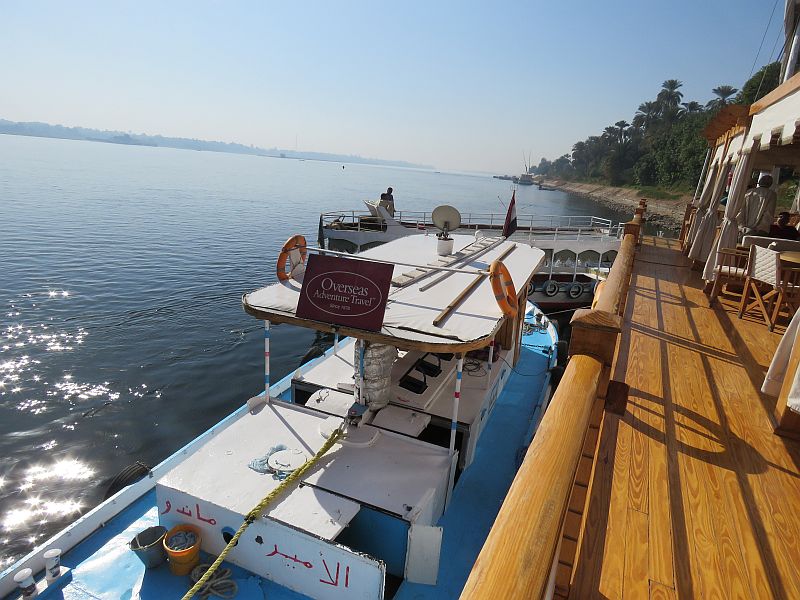
We reach the opposite shore in ten minutes or so and climb out of our transport and up the riverbank to the street. Here we find an OAT representative waiting for us along with three or four pickup trucks parked along the road. The pickup beds are enclosed by oversized pickup toppers and there are benches for us to sit down on. Hussein had told us at the beginning of our adventure that we would experience every form of travel that the Egyptians used. He was not kidding.


Daraw is known for its livestock market where locals bring various animals such as cattle, goats, and camels to trade or sell. Hussein informs us that the livestock sale is held once a week throughout the year. Unfortunately for us, today is not sale day, I would have loved to have experienced the market. There are farmers selling alfalfa today, so there is freshly cut alfalfa, stacked along walls, on carts and in pickup beds. I did see a buyer drive up in a pickup to one alfalfa dealer and the man filled the truck bed with the lush alfalfa. I have no idea how they determine what the hay is worth as there are no scales. I wished I had asked Hussein, but it didn’t cross my mind at that moment. Rats.


Hussein takes us into the area where the livestock market takes place. There is a tent to one side of the stockyard where a group of men are playing dominos. It is interesting to watch how they aggressively slap the domino they are playing onto the surface. They are all smiling but I have a feeling the men take the domino game seriously.

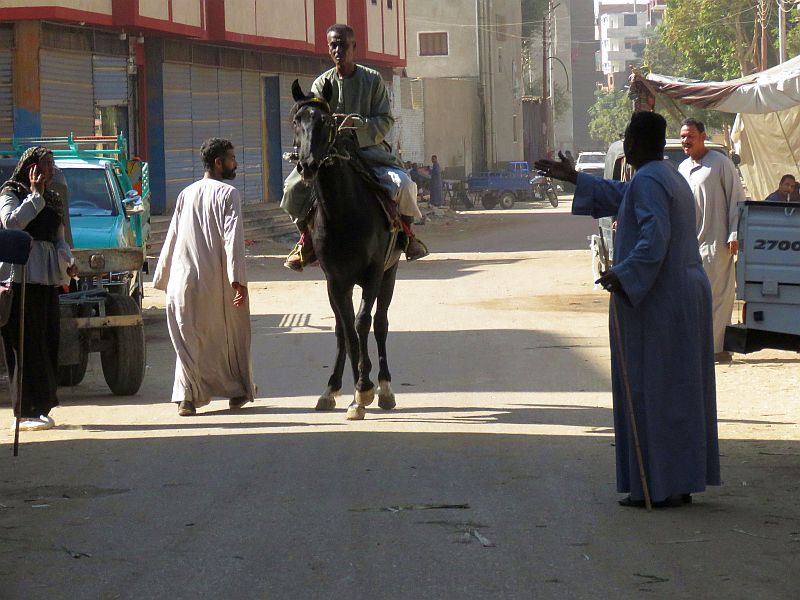
I believe this is where the man who is letting us tour his barn and livestock meets us. As we are following our host down the street, we meet a fellow that is riding a beautiful black Arabian horse. The horse becomes very skittish, and Hussein and our host ask us to move to the side of the road. The horse still is not happy, nor is the rider, but our host holds out his hand and speaks to the rider or the horse or both and slowly approaches the high-strung equine. After rubbing the horses muzzle and talking softly to him, the man takes hold of one of the reins and leads the horse past us. Once by us the horse prances on down the street. I find it so interesting as there are many locals walking along the street and as far as I can see the horse has no problem with them.

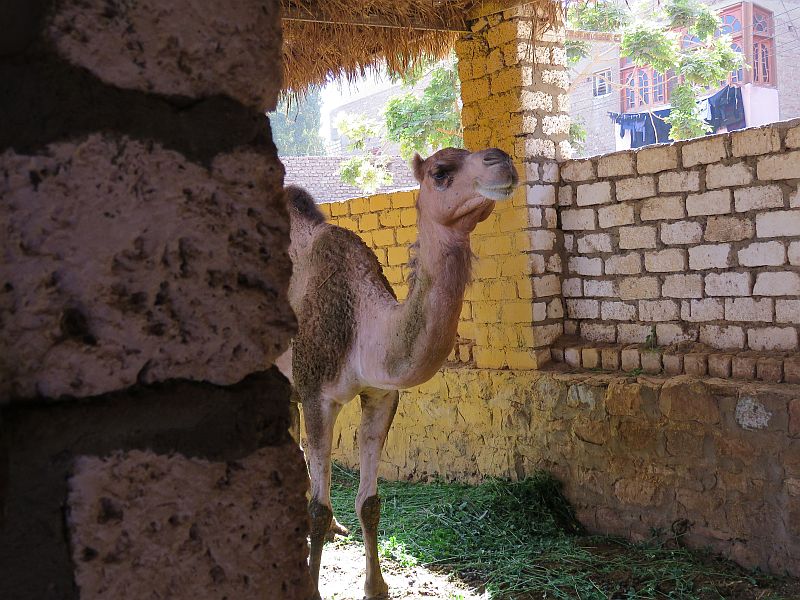
We continue to our host’s home and walk into the spacious barnyard where he keeps his livestock. The barn has stone walls and a thatched roof with openings on one side of the barn to allow air flow. In this portion of the barn, we encounter chickens, a rabbit, a tethered milk cow who is conversing with her calf, that is tethered on the other side of the barn, and one camel. There is horse tack, feed and all the items needed to take care of livestock too. Paul and I admire the young calf who is of high quality. Our host does not speak English, so Hussein translates what the man says about his cow, and the camel, among other topics of interest.
Slideshow of barn animals.


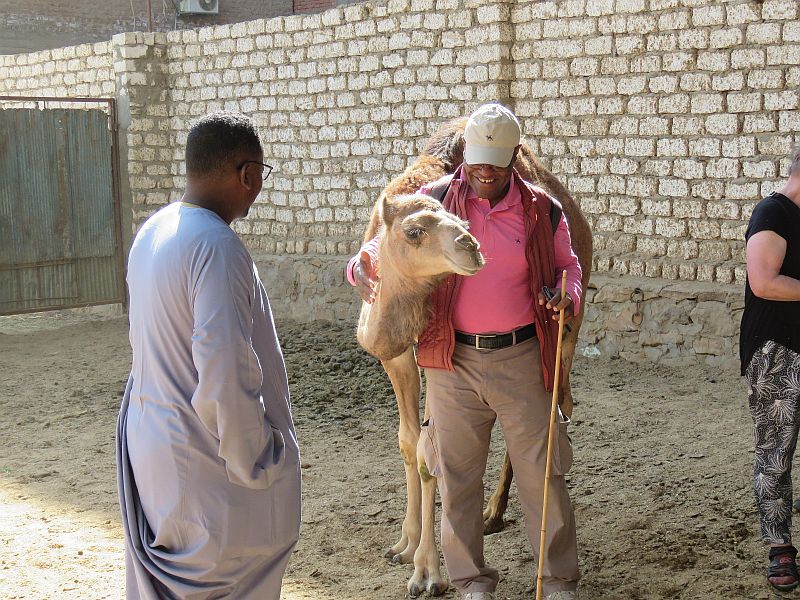
We leave the barn and walk into a large pen that has high rock walls for its boundaries. There is a beautiful sorrel horse standing in a small corral, keeping him separate from the donkey and a juvenile camel that occupy the rest of the pen. It is obvious the horse is the pride and joy of our host. He relates through Hussein that his stallion has competed in eight races, (I think), and won seven of them. Jennifer reminded me after I published this blog that Hussein told us there is no purse money for winning a race and that no gambling is allowed. The races are strictly for enjoyment by the people. I rub the friendly stallions’ neck and nose which the horse enjoys and admire his muscular build. Yep, this horse looks like he could flat-out run. Hussein tells us that the neighbors bring their mares to mate with the stallion. I ask what our host charges for the stud fee. Hussein seems surprised at this question but relates it to our host. Hussein tells us that the man says he would never charge money for the stallion servicing his neighbors’ mares. That would be considered selfish and rude. Huh.

The young camel has been busy eating his alfalfa but has been eyeing the strangers that have invaded his space. The camel trots over to Hussein and stands next to him. Hussein drapes his arm around the youngster’s neck, who promptly curves his neck around the front of Hussein. A short time later, the rascal kicks forward but misses hitting Hussein. Our guide pushes the camel off him and walks away. The camel begins kicking and bucking, he is only being playful but if he connected with you, it would feel anything but fun. The yearling finds out he can make these humans move away if he comes running and bucking at them. The onery camel does this several times prompting us to quickly move away from the unwanted playmate. Our guide finally shoos him back to his pile of forage and I guess the youngster has had enough fun as he goes back to munching his breakfast.
The man’s sons in the meantime are filling tubs with water for the camel and donkey. The three boys hardly look at us, I suppose they are used to tourists visiting their home. Our hosts wife looks out a window at us from far above, I unthinkingly snap a photo and am immediately told by Hussein, not to take photos of her. I foolishly forgot that you do not take photos of people unless they say it is okay and I understand that. It was such a great photo op that I just reacted instead of thinking.


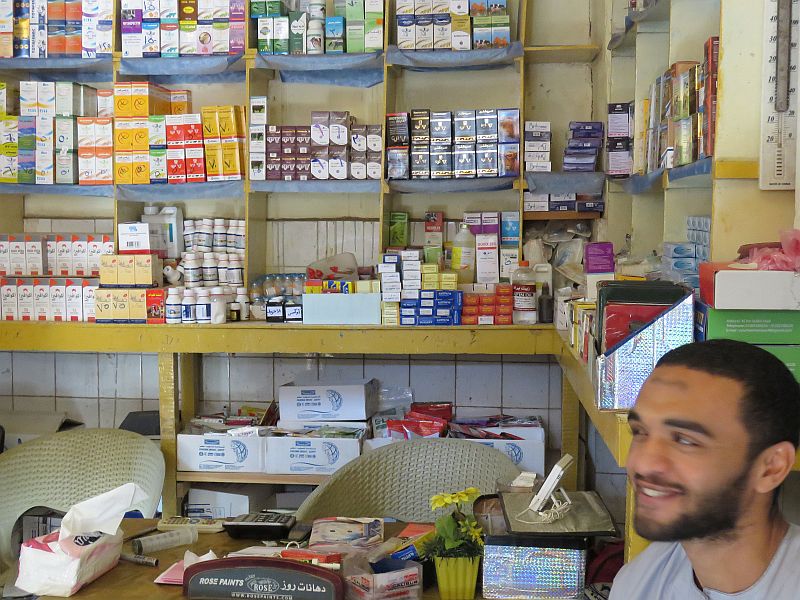
When we leave the village barnyard, Hussein takes us to a veterinary store which is stocked with all kinds of what I assume is medicine and vaccine for animals. Nothing is refrigerated as far as I can see. The two men, (one who is a veterinarian), occupying the small store are all smiles and willingly allow our group to snap their photo. One of the women in our group ask if there are female veterinarians. They answer, through Hussein, that yes, they have women vets.
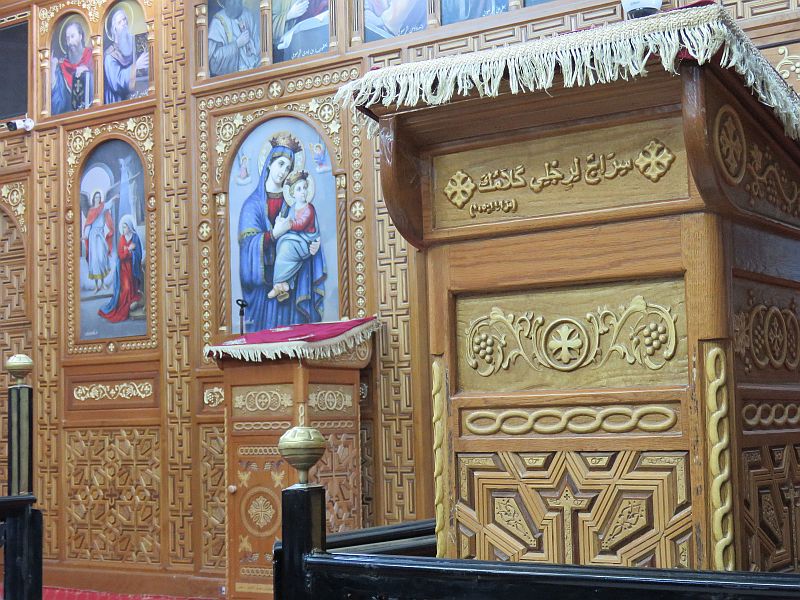
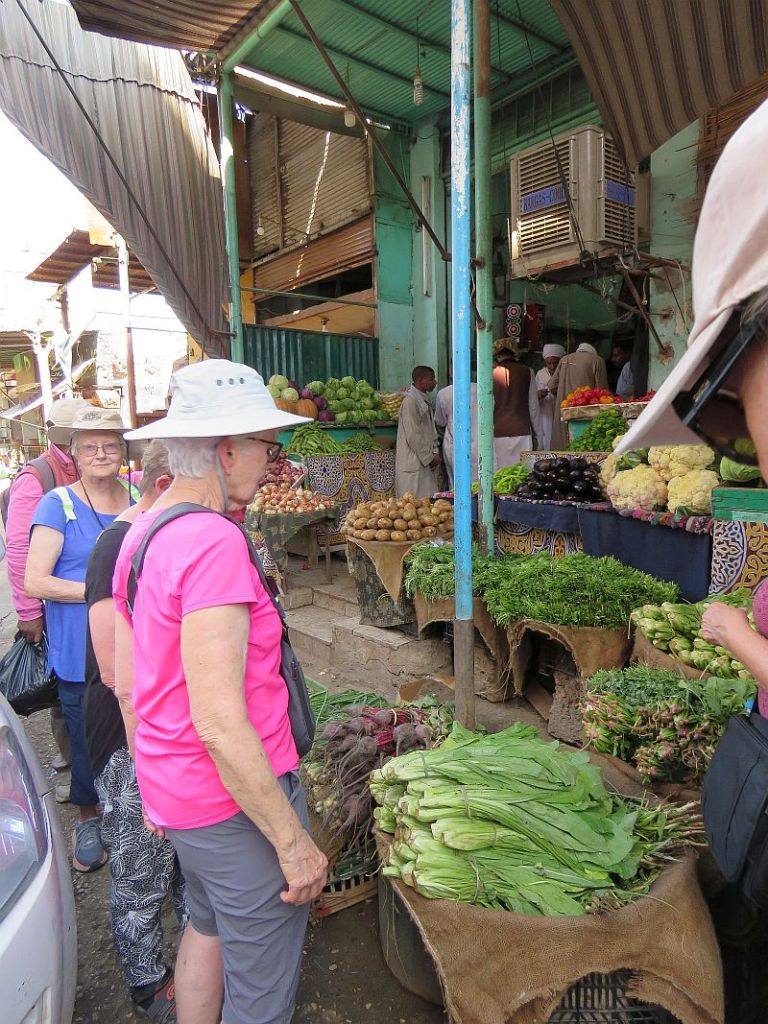
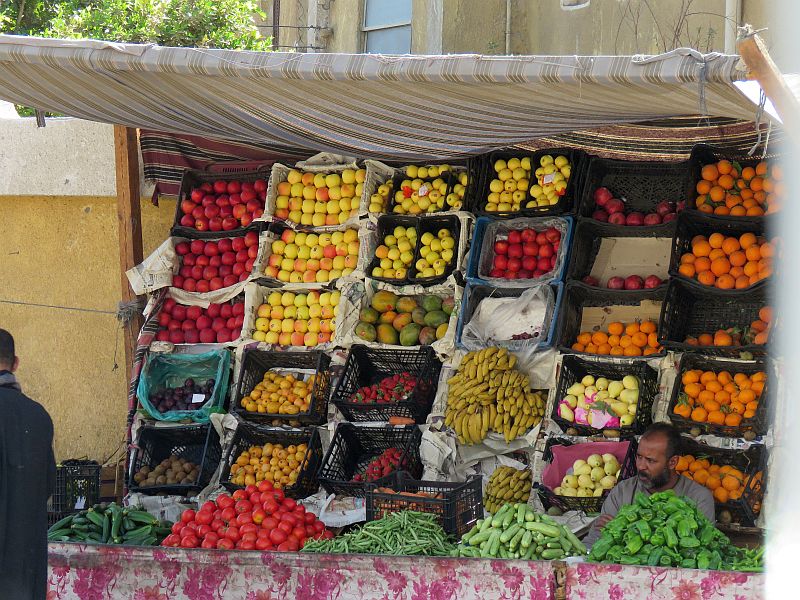
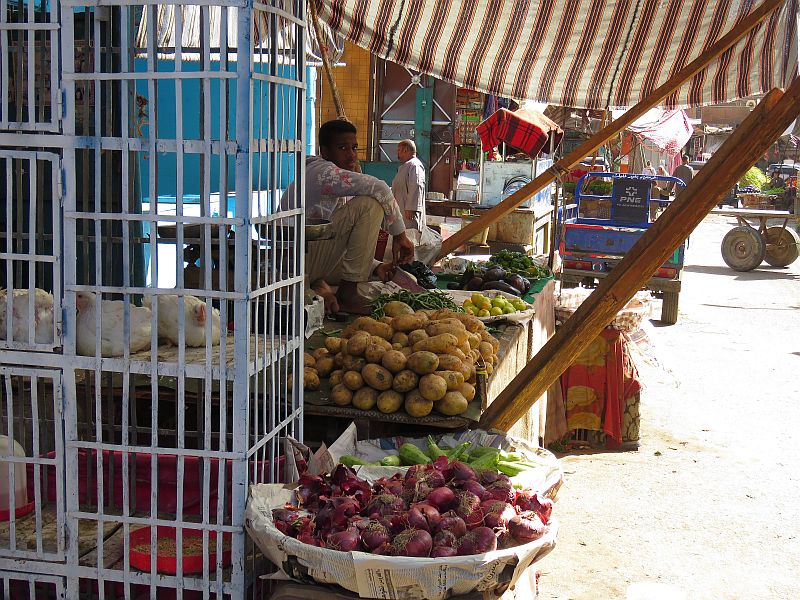
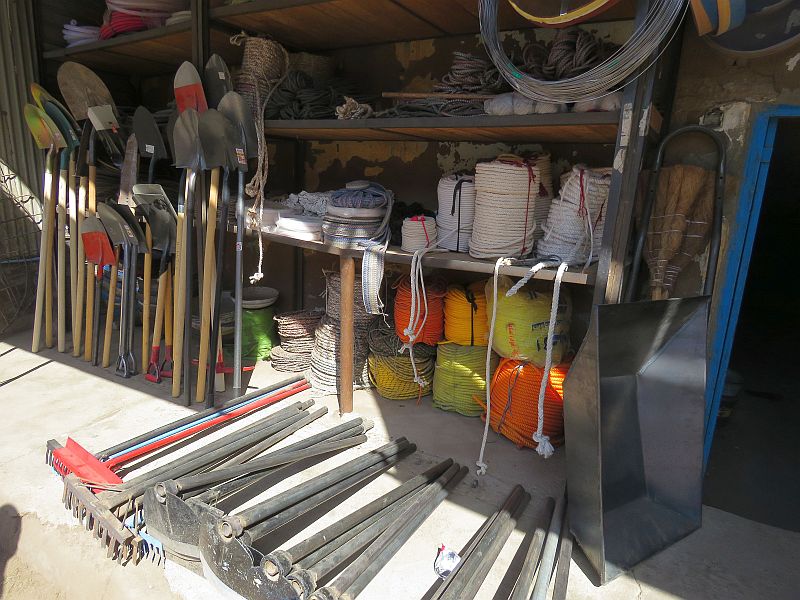
We follow Hussein into a busy street that is filled with vendors selling everything you could want. Fruits, vegetables, hanging carcasses of meat including camel, hardware items, spices, etc. Hussein turns into an alley which leads us to a Coptic Christian church. A man is sitting behind a table just before we arrive at the church entrance. When he stands up, I realize he is a guard. Well, that is not surprising considering the treatment this religious group receives over much of the world. A man, arrives and lets us into the church, we file down the aisle, exclaiming over the ornate building. We sit in pews while Hussein talks about the Coptic Christians. Hussein also points out a painting that depicts Joseph, Mary, and baby Jesus, with the pyramids in the background.

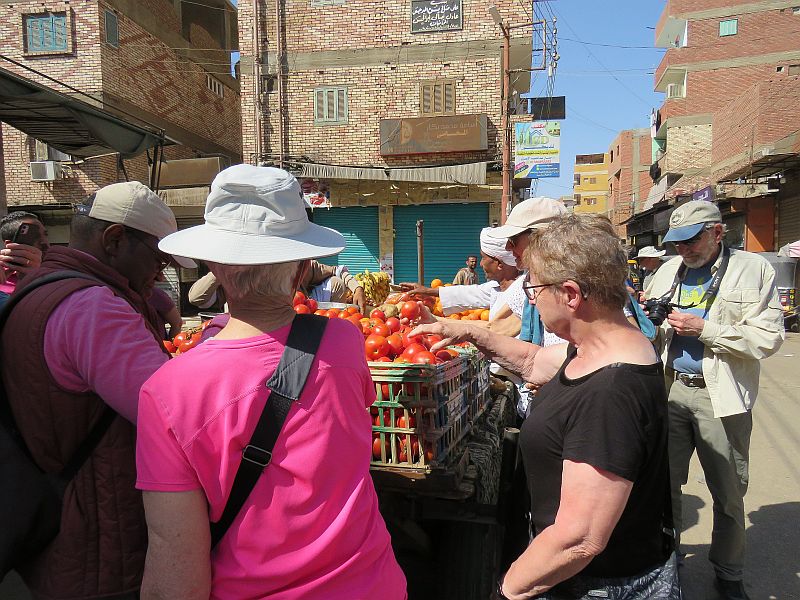
Leaving the beautiful church, we dutifully follow Hussein back to the bustling street. Hussein chooses various members of our group to help him buy food items to take back to the ship. Bread, tomatoes, eggplant and other items. Paul ends up toting the tomatoes back to the Aida. I just take photos.
A slide show of our group buying vegetables and of the colorful market.

We crawl into our pickup boxes and begin the drive back to the Nile and our waiting motorboat. We haven’t gone far when two boys jump onto the pickup bumper and hang on to the topper. The surprise on their face when they see a bunch of foreigners sitting inside is priceless. I snap a photo, figuring the stowaways are fair game. I swear one of the boys tells his companion in English, ” she took our photo” and yet why he would converse in English doesn’t make sense. The two jump off at their stop and we continue on our way.

On our boat trip back to the Aida, Hussein plugs in his phone to speakers that are on the boat in order to play some Nubian music. Our guide begins to show us some Nubian dance steps and then asks Jennifer if she wants to join him. Jennifer dances her way up to the “stage” and the rest of us are entertained by the dancing pair on our return trip to our ship. I am so amazed how Jennifer just picks up the dance movements that I forget to take photos! So, we have a comedian that entertains us at mealtime and a dancer from Kansas who entertains us on our boat taxi! What more could you want?


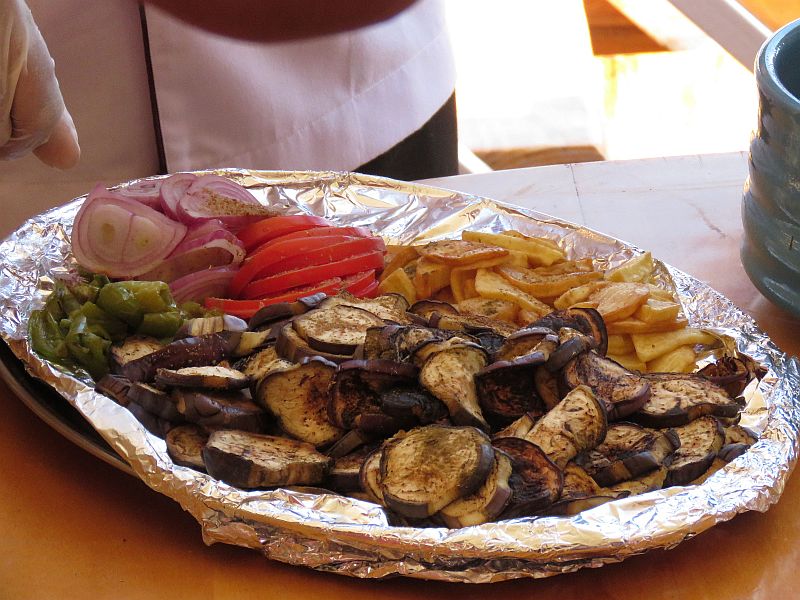
Shortly after we are back on board the Aida, the chef and ship captain gather people around for a cooking lesson on the observation deck. Using the ingredients that Hussein bought in Daraw, two women help put together dishes that are traditional Egyptian fare. We are served the two dishes at lunch, and they are quite tasty.

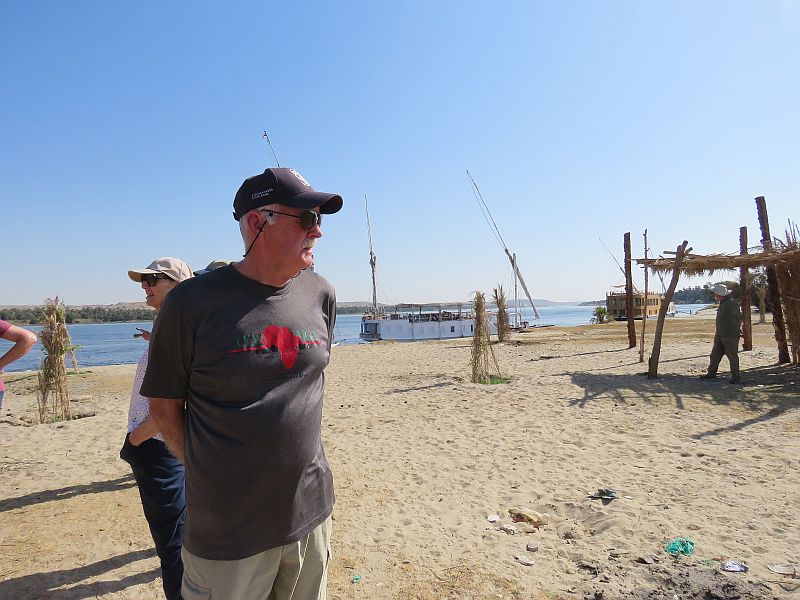
Paul and I have been taking an after-lunch nap but there is no time for that today as the crew ties up at an island, shortly after we have finished eating. Hussein takes a few of us for a stroll on the island. It is another hot afternoon but tolerable. The sand near the river’s edge is deep and hard to walk through. As we get farther away from the Nile, the sandy ground is more solid making it much easier to get around. Hussein takes us to a small hut that is made from palm tree fronds. A man trots up on his donkey and Hussein tells us the man is here to let us ride the small donkey. Three of us, including me, opt to take a ride on the small donkey which is controlled only by its owner. No bridle, no stirrups or saddle, just an old blanket thrown over the mottled donkey’s back. The man maneuvers the donkey in a large circuitous route before we dismount the gentle critter. Once our rides on the gentle donkey ends, the owner jumps on the donkey’s back and his mount trots back down the trail. I only saw the man nudge the donkey with his heels, so I guess the donkey just knew where to go. Hussein takes us down a different trail where we walk by farm fields and through a stand of large trees. There is a web of irrigation canals running through the orchard. I believe these were mango trees.


The before dinner movie tonight is Agatha Christies “Murder on the Nile” complete with bowls of popcorn. This is the 1970’s movies not the remake that was released last year. In my opinion this movie was better than the new movie but neither movie was as good as the book. Still, it was pretty neat to be sailing up the Nile while watching a movie that was set on a ship like ours sailing on the Nile!
The staff always takes our dinner order at breakfast and Paul and I both decided not to order a main course. It is just too much food for us in the evening. Paul and I have plenty to eat with only having the soup, bread, and dessert. Paul and I bust out laughing when Sayid sets an empty plate in front of us when he is serving the other people their main course. Paul picks up his empty plate and pretends to lick it clean while Sayid is laughing at the joke he has played on us. We have to explain the empty plate to our table mates which makes them laugh too. We love the Egyptians sense of humor.
After our meal we return to our cabin and begin to pack our suitcases. I am really going to miss the Aida, the kindness of the crew and particularly the relaxing atmosphere of traveling via the Nile River. I think it was the Minnesota women who threatened to lock themselves in their cabins in the morning, so they did not have to leave the Aida. I believe everyone in our group has loved this Nile adventure and are all sad to see it coming to an end.
Visiting the Aswan Dam and driving to Abu Simbel.


 realityranching