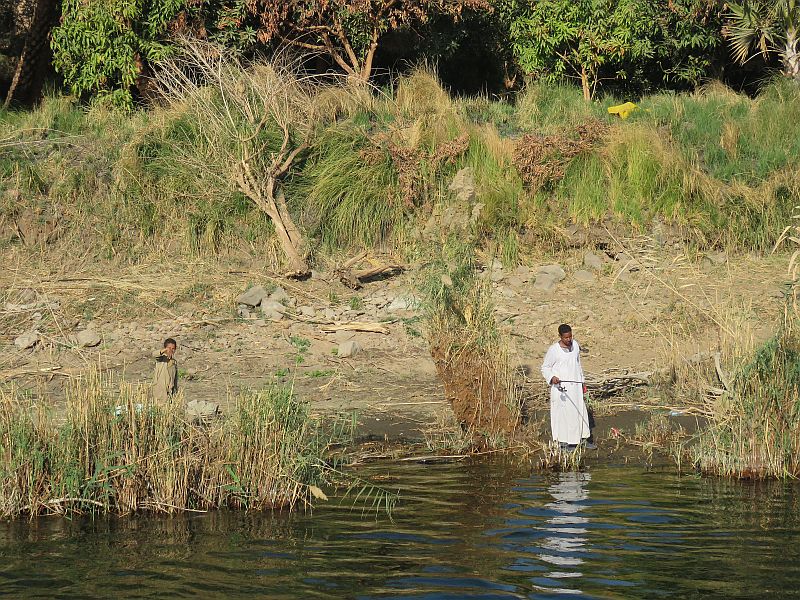
Another pleasant morning “observing” life along the Nile from the observation deck. One of the first things we see this morning is a young boy riding a donkey. He is leading a reluctant Friesian cow down the quarry path that we were walking on yesterday. There is a yearling calf bringing up the rear. We sail past the cow and calf a short time later grazing in a small patch of reeds. The boy and the donkey are nowhere to be seen. We also float by stone structures along the riverbank that are part of the ancient quarry that were off limits to us on our tour yesterday.


We sail for an hour more or less until we reach the village where the craftsman we are visiting lives. Once the Aida is tethered, we leave the ship, pair up and crawl into tuk-tuks’ which will be our transportation to the local crate builder. Our driver pulls the heavy blanket aside that serves as the door and Paul and I crawl into the small vehicle and sit down. Paul holds the curtain back so I can take photos as we bounce down the sandy roads.

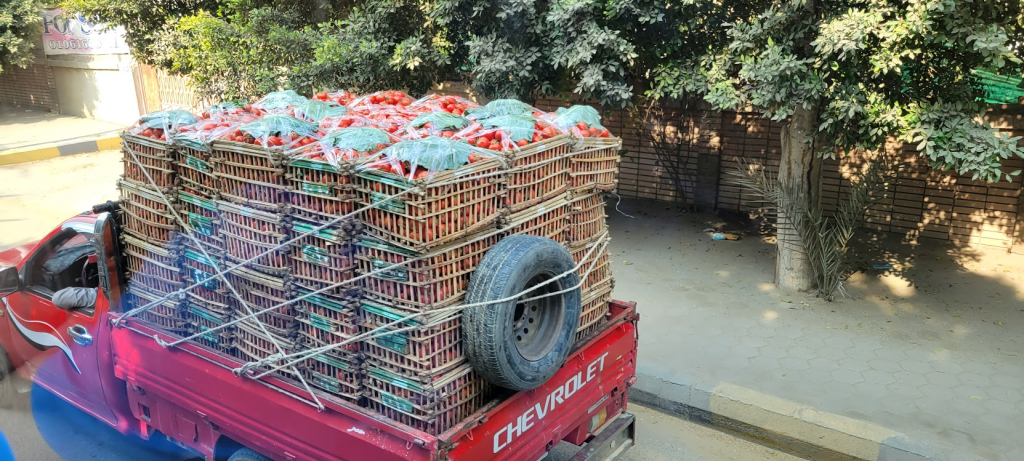
The caravan of tuk-tuks’ stop along the side of an unpaved road and Hussein takes us down a path that leads to the craftsman’s work shop. A wizened man is waiting for us, and he greets Hussein and our group with a wave and smile. There are handmade benches arranged in a half-circle around the man’s working area. The “workshop” consists of a portion of a tree trunk that serves as the man’s workbench and his chair is the ground. And to think I complain that my chair I sit in for computer work is not comfortable! There are piles of finished crates lined up behind the workman which he sells to his customers who use them for shipping farm produce. I wish I could remember what our host is paid for each crate. I want to say that it is twenty-five cents in our money but don’t hold me to that.
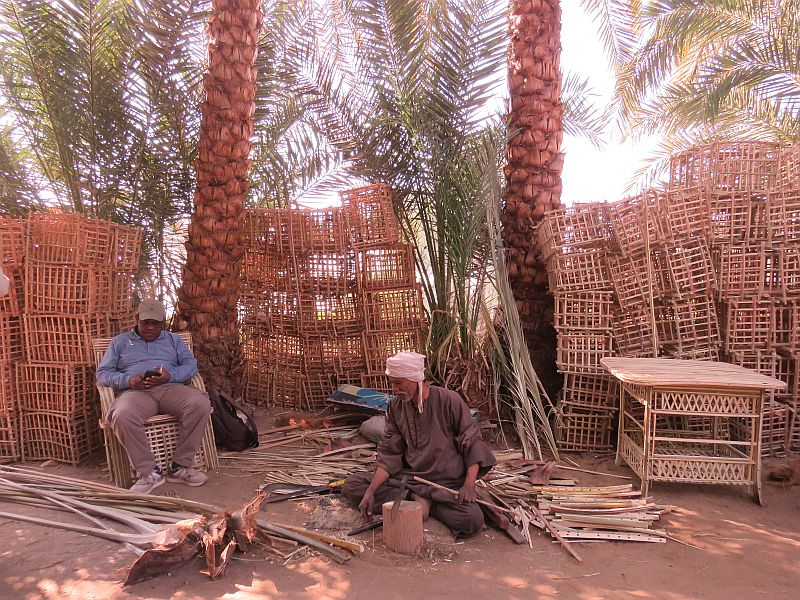
The craftsman begins building a crate and it is fascinating to watch how quickly he measures the palm wood, cuts, and slices it, punches holes part of the way through the thin wood and more. The craftsman has two different knives he uses. One knife looks like a cleaver and the other large knife has a wicked curved blade. The fellow often uses his feet to hold the crate steady and I admit I check out his feet and hands to see if all his fingers and toes are accounted for.
A slideshow of the craftsman at work.


Once he has the framework of the crate completed, he points to the tall guy in our group to come help him finish the box, nope it is not Paul. The two work together building the box. The teacher corrects a couple of minor mistakes his pupil made which is impressive considering our friend is a novice. When the box is finished our host hands his apprentice one of the curved-bladed knives. The two men hold the knives over the completed project, blades touching in a symbolic gesture that the project is finished. A woman is selected this time to help the man build another crate. Again, the man has a good student and only has to remedy a couple of mistakes.
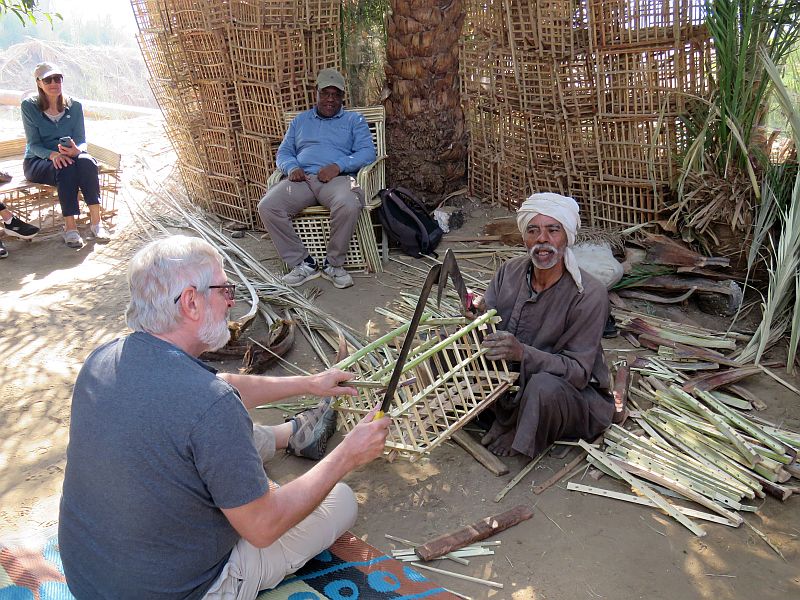
The craftsman then constructs a small box which he finishes in short order. When he completes the box, our host gathers up some items that are lying to one side. The craftsman hands each of us an Ankh also known as the key of life that he has fashioned from the same palm wood he uses to make his crates. The key of life symbolizes both mortal life and the afterlife. The Egyptian gods depicted in tomb paintings and carvings often carry the Ankh. Two women ask Hussein if they can buy the small box that the craftsman made. Hussein relates the question to our host who ends up giving each woman a box since he has extra boxes stacked inside a crate. This gift from the craftsman is the only souvenir that Paul and I brought home.
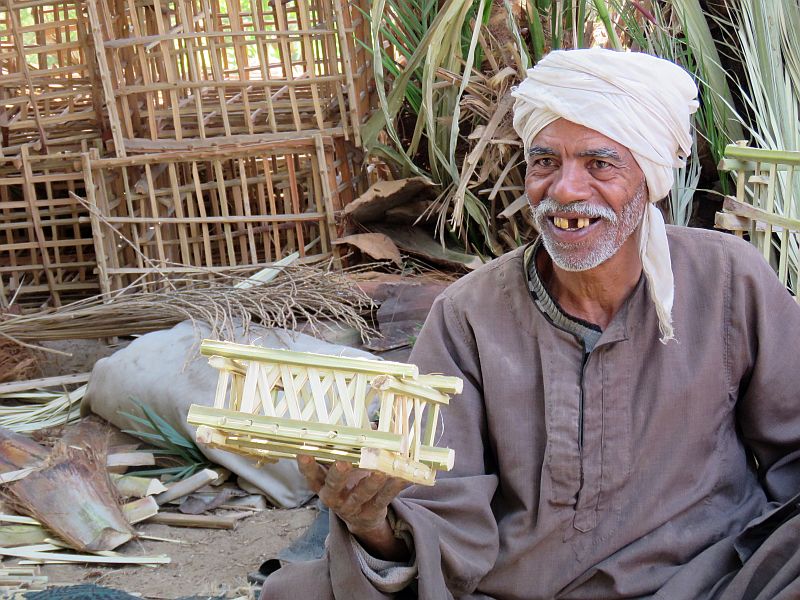
Hussein talks about our host off and on while we are watching him work. The craftsman has two men that help him in his business. Our host also has two wives, one in Cairo and one in this village. Hussein says that the fellow told him he had to marry a local village woman in order to be accepted here, but Hussein is laughing when he relates this info to us. Hussein also tells us how many crates the man can make in a day, who sells him the palm fronds, and what they cost, etc. but unfortunately, I cannot remember the details.
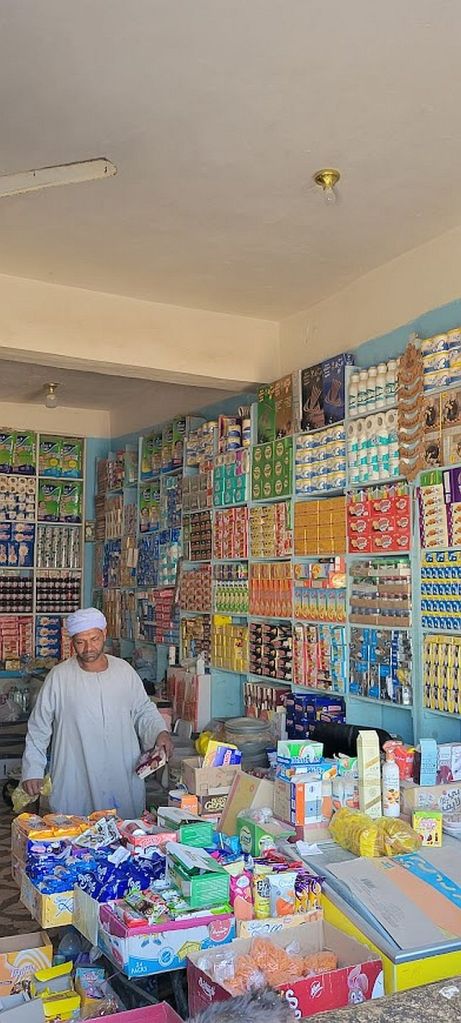
We leave our host after thanking him for giving us a glimpse into his life as a crate maker and for the gifts he gave us. We go back to the tuk-tuk’s which take us back to the Aida. Jennifer and Hussein have shared a tuk-tuk on this foray since the woman who fainted yesterday decided not to join us this morning. Hussein made a stop at a grocery store as he needed coffee, so lucky Jennifer got to see the village grocery store. Hussein bought Jennifer some chocolate covered Oreos, and she is kind enough to share a package with us. Yes, you have read this before because I mistakenly thought this happened two days ago. I should have read my journal as I had made a note of their side trip but now it is in the correct order.
Today we eat lunch inside due to the heat and wind. Guess who we happen to eat our meal with? Yep, the women from Minnesota. Oh okay, we see that there is room at their table and ask if we can sit with them. I may not be eating much but I wouldn’t have the opportunity even if I was because our friend has me laughing all through our lunch.
We arrive at Kom Ombo mid-afternoon where the temple we are visiting is located. When we leave the ship, it is only a short walk to the temple. It is hot this afternoon, 90ish, and Paul wonders if I should go on this tour, since I do not handle heat very well. I decide to go as I figure I can find a place out of the sun to sit, if I begin to get too hot.
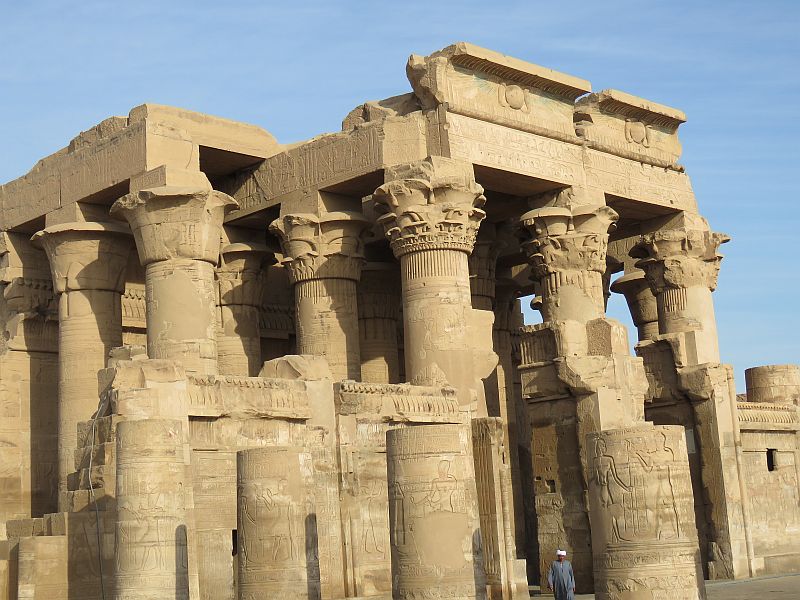
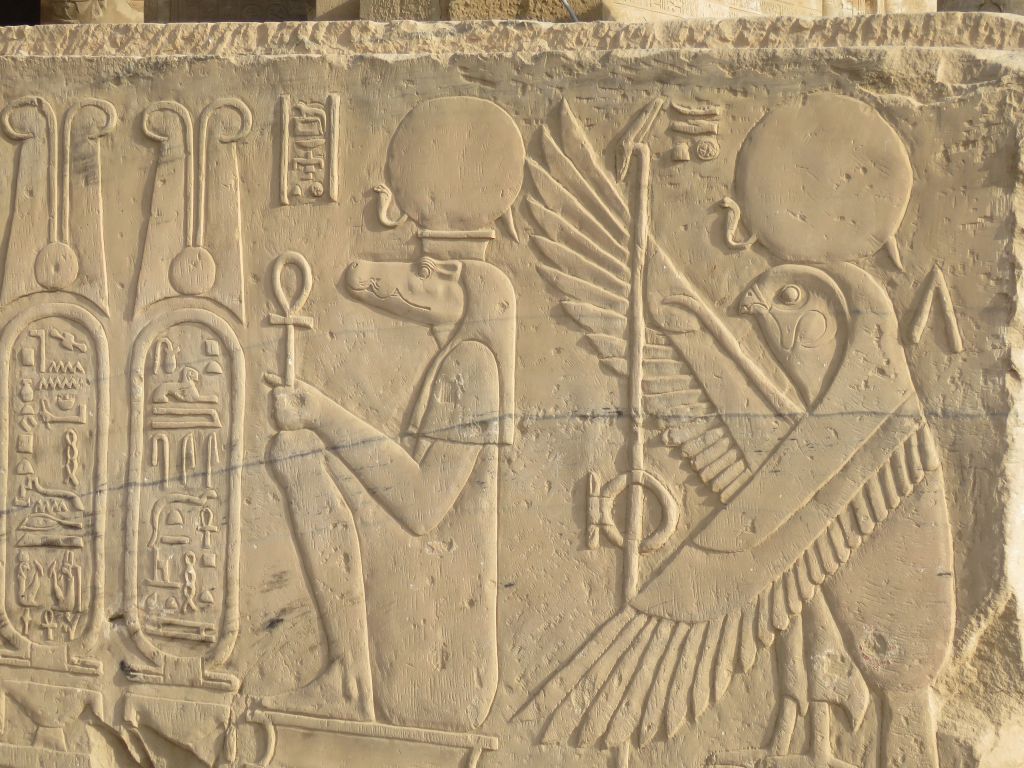
Hussein explains that Kom Ombo is a twin temple meaning one side is dedicated to Horus, the Falcon God who is the ruler of all Gods. The other side is dedicated to Sobek the Crocodile God who is god of crocodiles, strength and power. This temple is unique as everything is doubled and symmetrical along the main axis: twin entrances, twin courts, and twin colonnades. Yea, I copied this sentence out of our OAT book, no way I would remember that.

There are a lot of tourists here and everyone appears to be suffering from the heat. Hussein does his best to keep us out of the sun but that is not an easy task. Paul even admits he is looking for shade and Paul generally is not bothered by heat. We wander after Hussein looking at the temple depictions of the Crocodile God more than those of Horus since we have seen Horus in all the temples.
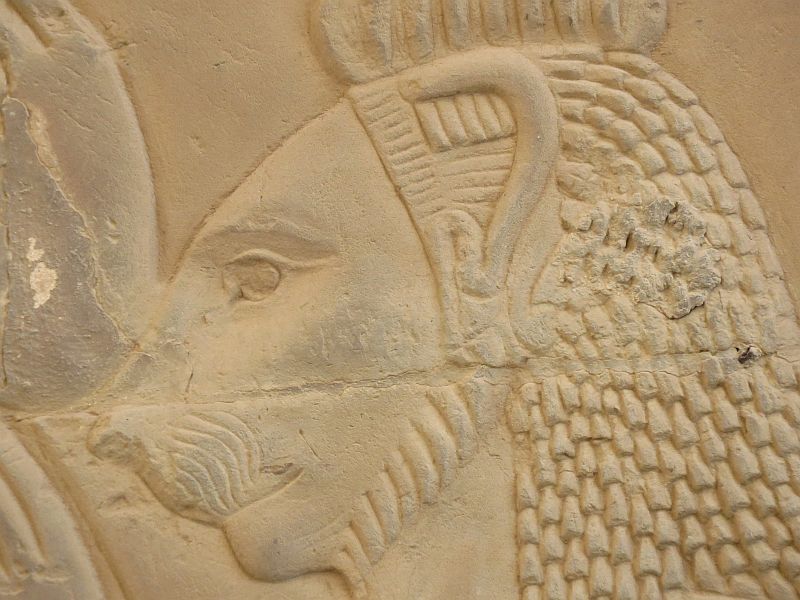
Slide show of the temple and carvings. Notice the key of life the seated crocodile god is holding. The green dot on the pharaohs chin is Hussein’s light he used to point things out to us.


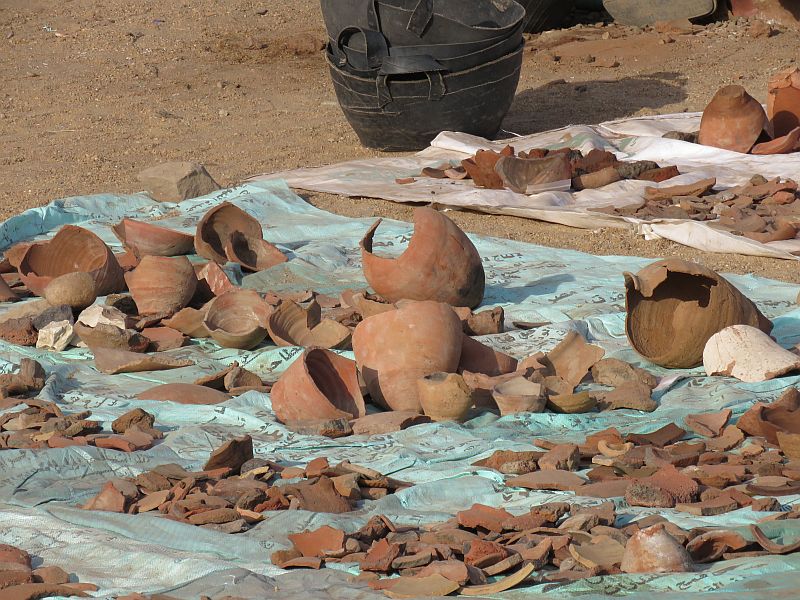
There are archeologists working right by the temple and it is astonishing to look at all the pottery shards that are laid out on the ground. I wonder if they intend to try and put those pots back together as the pieces seem to be grouped in small piles. What patience that would take but how rewarding when you accomplished the task. I always thought it would be fun to go on an archeology dig but I wouldn’t last an hour in this heat.
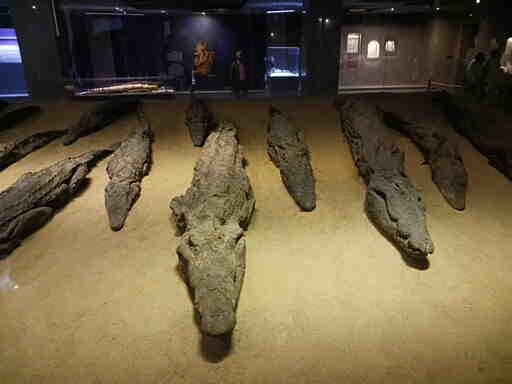
There is a Crocodile Museum here, that as you can guess, is a museum that contains Nile crocodiles. The mummified crocodiles on display are all sizes from very large crocs that you would not want to encounter in life, to a crocodile that is still in the egg. The museum is kept relatively dark to preserve the mummified crocodiles plus it is air conditioned. Boy does that cool air feel good.
This evening Hussein discusses modern Egypt using some film clips to highlight some of the topics he is covering. The main thing I recall Hussein discussing is the tough times Egypt has been through prior to the 2011 uprising and after that coup. Terrorism, attacks on tourists, government crackdowns before the coup and after the coup against protesters, resulting in deaths and injuries of citizens. The attacks on tourists through the years severely impacted tourism in Egypt which obviously impacted the economy. Hussein tells us that tourism had begun to recover when Covid shut down the world. Inflation is another huge problem in Egypt and the people are struggling. The government/ army is competing with private business in all aspects like farming, operating ferries, even gas stations and private businesses are having a tough time competing with the government run operations. Hussein is very candid when he discusses the country and government and seems to not be concerned at all about levying criticism along with the positive aspects.
When Hussein finishes his presentation, we go to the dining area where we sit with our friends from Minnesota and the woman who is traveling solo. Tonight, our humorous friend relates some of the pranks she played on her students. I will not relate the stories as I do not have permission to, but trust me, if you were a student of this woman, I doubt you would ever forget her! Our comedian also tells jokes and after one of the jokes, her traveling companion remarks with some surprise that she has not heard that joke before. That was funny in itself. Our day ends with laughter again which is always good.
Touring a man’s barn and livestock in a village, shopping for vegetables, taking a short walk on an island. Our last night on the Aida.


 realityranching
The picture of the crate builder holding the wooden rod with his feet while working on it with his hands is incredible. I wouldn’t have even thought about doing that and, of course, I couldn’t do it now if I tried.
Thanks for sharing all these writeups about you guys’ adventures. I really enjoy reading them a lot.